
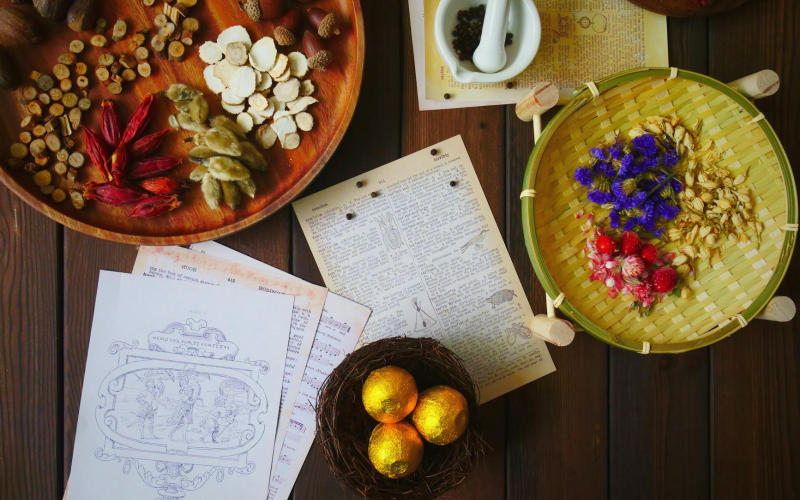

My grandmother kept a small tin box in her kitchen cabinet. Dried herbs, hand-labeled in her scratchy handwriting. Valerian for sleep, elderberry for colds, ginger for “whatever ails you.” I watched her brew these things as a kid and honestly thought it was just… old lady superstition.
Turns out she was running an evidence-based apothecary before evidence-based was even a phrase.
Modern pharmacology has spent the last two decades catching up to what generations of women knew by instinct and observation. Some of these remedies stretch back thousands of years. And the research validating them isn’t fringe stuff buried in obscure journals nobody reads—we’re talking NIH-funded clinical trials, meta-analyses, peer-reviewed work in publications like the Journal of Ethnopharmacology and Phytomedicine. So before you roll your eyes at what your grandmother swore by, keep reading.
1. Elderberry for Colds and Flu
This one hit mainstream consciousness around 2020, but elderberry syrups have been sitting in European folk medicine since at least the 17th century. Culpeper wrote about it. Your great-great-grandmother almost certainly kept a bottle somewhere.
A 2016 randomized trial published in Nutrients found that travelers who took elderberry extract for 10 days before and after long-haul flights had colds lasting an average of 2 days less than the placebo group. That’s not nothing. A 2021 meta-analysis then confirmed significant reductions in both duration and severity of upper respiratory infections across multiple elderberry studies.
The active compounds are anthocyanins—specifically cyanidin-3-glucoside and cyanidin-3-sambubioside, if you want to get nerdy about it. They appear to inhibit viral replication and stimulate cytokine production. Basically, they nudge your immune system into gear.
Make it at home: Simmer 1 cup dried elderberries in 3 cups water for 45 minutes, add honey and a cinnamon stick, strain. One tablespoon daily during cold season.
2. Valerian Root for Sleep
Not glamorous. Smells genuinely awful—think dirty socks fermenting in a gym locker. But valerian has been used as a sleep aid since ancient Greece, and Hippocrates himself documented it.
The science is actually pretty solid. A 2020 systematic review in PLOS ONE dug through 60 studies and found valerian root significantly improved both sleep quality and how fast people fell asleep—without the morning fog that comes with pharmaceutical sleep aids. The proposed mechanism involves valerenic acid, which appears to modulate GABA receptors (the same pathway targeted by benzodiazepines, but far more gently).
Your grandmother didn’t know any of that. But she knew it worked.
Standard dose is 300–600mg of standardized extract taken 30 minutes before bed. Give it two weeks before you judge it. Results aren’t instant, and that’s fine.
3. Ginger for Nausea
This might be the most thoroughly validated remedy on this entire list. Ginger’s anti-nausea properties have been studied obsessively. A 2014 Cochrane review of 12 randomized controlled trials specifically examined ginger for pregnancy-related nausea and concluded it was both effective and safe—superior to placebo and comparable to Vitamin B6.
A separate 2012 study in Supportive Care in Cancer found that cancer patients undergoing chemotherapy who took 0.5–1g of ginger daily experienced significantly less acute nausea than those on placebo.
The mechanism involves 6-gingerol and 8-gingerol, compounds that interact with serotonin receptors in your gut. Which is exactly where nausea originates.
Fresh ginger tea is still the simplest delivery method. One thumb-sized piece, sliced thin, steeped in boiling water for 10 minutes. Add lemon if you want. That’s genuinely it.
4. Turmeric for Inflammation
Every wellness brand on Instagram sells turmeric supplements now, which honestly makes me cringe a little—not because turmeric doesn’t work, but because the commercialization tends to strip away something real and replace it with a logo.
Ayurvedic medicine has used turmeric for inflammation and joint pain for over 4,000 years. A 2019 systematic review in the Journal of Medicinal Food analyzed 12 clinical trials and found curcumin (turmeric’s active compound) reduced inflammatory markers—specifically CRP and IL-6—comparably to ibuprofen in osteoarthritis patients, but without the gastrointestinal side effects.
Here’s the catch your grandmother wouldn’t have known: curcumin has terrible bioavailability on its own. But black pepper contains piperine, which increases curcumin absorption by up to 2,000% according to a 1998 study in Planta Medica. Traditional Indian cooking almost always pairs turmeric with black pepper. That’s not coincidence. That’s centuries of accumulated wisdom quietly working.
Golden milk recipe: warm oat milk, 1 tsp turmeric, pinch of black pepper, honey to taste.
5. Chamomile for Anxiety and Digestion
Chamomile tea feels almost childishly simple. Quaint, even. But a 2017 long-term clinical trial out of the University of Pennsylvania—which followed 93 patients with generalized anxiety disorder over 26 weeks—found that chamomile extract significantly reduced relapse rates compared to placebo when taken daily.
And it’s legitimately effective for digestive cramping too. The antispasmodic effects come from apigenin, a flavonoid that relaxes smooth muscle tissue in your gastrointestinal tract. Your grandmother made you drink it when you had a stomachache. She was right. Medically, actually right.
6. Garlic for Cardiovascular Health
Raw garlic in everything. That was my grandmother’s personal philosophy, and her cholesterol at 78 was genuinely enviable.
A 2016 meta-analysis in the Journal of Nutrition examined 39 primary trials and found garlic supplementation produced meaningful reductions in total cholesterol and LDL levels. A separate 2020 Cochrane review found modest but real blood pressure reductions among people with hypertension.
Allicin is the compound doing the work—but it’s only produced when garlic is crushed or chopped and then left exposed to air for about 10 minutes before you cook or eat it. Most people skip those 10 minutes entirely. Your grandmother just minced it first and went back to stirring whatever was on the stove. Turns out that little pause mattered.
7. Peppermint for Headaches and IBS
Peppermint oil applied to the forehead was compared directly to acetaminophen in a 1996 double-blind trial from Cephalalgia. For tension headaches? Equivalent effectiveness. Seriously.
For IBS, the evidence runs even stronger. A 2014 meta-analysis in the Journal of Clinical Gastroenterology found peppermint oil capsules significantly outperformed placebo for reducing abdominal pain, bloating, and overall IBS symptoms across 9 clinical trials.
L-menthol is doing the heavy lifting—it activates cold receptors (TRPM8 channels) and inhibits serotonin receptors in the gut. But your grandmother just made tea, and that was enough.
8. Lemon Balm for Stress and Cold Sores
Less famous than the others on this list. Worth knowing anyway.
Lemon balm—Melissa officinalis—was a staple in medieval monastery gardens because monks relied on it for anxiety and poor sleep. A 2004 study in Psychosomatic Medicine found a single dose of lemon balm extract reduced stress and lifted mood in healthy volunteers within hours. And a separate line of research found that rosmarinic acid in lemon balm carries antiviral properties specifically effective against HSV-1, the virus behind cold sores.
Fresh leaves steeped in hot water for 5 minutes. That’s all your grandmother did. And that, apparently, was enough.
Bottom Line
Here’s something nobody talks about enough: traditional plant remedies weren’t stumbled upon by one clever person on a lucky afternoon. They were stress-tested by thousands of people across hundreds of years, with the ineffective ones quietly dropped and the useful ones passed forward through family lines and community knowledge. That’s not anecdote. That’s a slow-motion clinical trial running across generations. Modern science isn’t discovering these remedies—it’s finally building the vocabulary to explain why they already worked.
Frequently Asked Questions
Are these traditional herbal remedies safe to combine with prescription medications?
Some aren’t. Valerian can intensify sedatives. St. John’s Wort (not on this list, but closely related territory) interferes with dozens of drugs—including birth control and blood thinners. Always tell your doctor what you’re taking. Herbal doesn’t automatically mean harmless.
How long before you see results from herbal remedies?
Depends entirely on the remedy and the condition. Ginger for nausea works within 20–30 minutes. Valerian for sleep needs 2 weeks of consistent use. Garlic for cholesterol shows measurable changes after 8–12 weeks. Don’t write off a remedy after 3 days.
Where do you source quality dried herbs?
Bulk Herb Store, Mountain Rose Herbs, and Starwest Botanicals are consistently reliable. Avoid anything that doesn’t list country of origin or batch testing information. Cheap herb powders from random Amazon listings are often adulterated or oxidized well past usefulness.
Is fresh always better than supplements for these herbs?
For ginger and garlic, fresh genuinely wins. For valerian and lemon balm, standardized extracts are actually more consistent—potency in fresh herbs swings wildly depending on growing conditions, harvest timing, and how they’ve been stored. It really does depend on the herb.
This article is for informational purposes only and should not replace professional medical advice.
Photo by wqeqwe q5w45 on Pexels

