

Here’s the uncomfortable truth most colon-cleanse articles won’t tell you: your colon doesn’t really need to be “cleansed.” MD Anderson Cancer Center has said this plainly — the colon is self-cleaning. Your digestive system handles waste removal on its own, pretty effectively, without a $40 supplement from Amazon.
So why are we talking about foods to cleanse your colon? Because what you eat absolutely shapes how well that self-cleaning system works. And right now, in 2026, that conversation feels urgent in a way it didn’t five years ago.
The Reason This Matters More Than Ever Right Now
An NPR report from April 2026 featured Georgetown University oncologist Dr. John Marshall, who noted that nearly half his clinic’s colon cancer patients are now under 50 — compared to essentially zero thirty-plus years ago. The American Cancer Society confirmed in January 2025 that colorectal cancer is now the leading cause of cancer death in men under 50. Second in women under 50.
That’s not a small shift. That’s a crisis quietly building.
A peer-reviewed paper in eBioMedicine (May 2025) pointed directly at the gut microbiome — specifically genotoxic bacteria like Fusobacterium nucleatum. as key players found in colorectal tumors. Translation: what you feed your gut bacteria matters enormously. And most of us are feeding them terribly, with ultra-processed food now accounting for more than half of daily calories for many Americans.
The Foods That Actually Support a Healthy Colon
Start with fiber. The American Cancer Society recommends 30 grams daily. Most Americans get roughly half that.
But here’s the detail most guides skip: fiber isn’t one thing. Soluble fiber (think pears, oats, apples) absorbs water and bulks up stool, making it easier to pass. Insoluble fiber (think grapes, whole grains, leafy greens) physically pushes food through your intestines faster. You need both, for different reasons.
Cruciferous vegetables deserve a real spotlight here. A 2024 analysis of 226 studies published in Nutrition Reviews found that eating about 5.4 servings of cruciferous vegetables per week, broccoli, cauliflower, Brussels sprouts. lowers colorectal cancer risk by 23%. That number stopped me when I first read it. Twenty-three percent is not nothing.
Fermented foods come next. Yogurt, kefir, kimchi, sauerkraut, these feed the beneficial bacteria your colon depends on. Gastroenterology dietitian Sarah Masukewicz, RD at Tufts Medical Center, has specifically noted that a diverse diet builds a diverse microbiome, and diversity is protective.
And then there’s an angle almost nobody mentions: omega-3 fatty acids. Fatty fish, flaxseed, chia seeds. these reduce colon inflammation, which is a core risk factor for colorectal cancer. Most food articles focus entirely on fiber and probiotics and completely ignore the anti-inflammatory piece.
What to Skip (Seriously, Skip It)
Red meat. The ACS data is clear, 100g of red meat daily raises colon cancer risk by 15-20%. Processed meats (looking at you, deli turkey and bacon) are even worse at just 50g daily for that same increase.
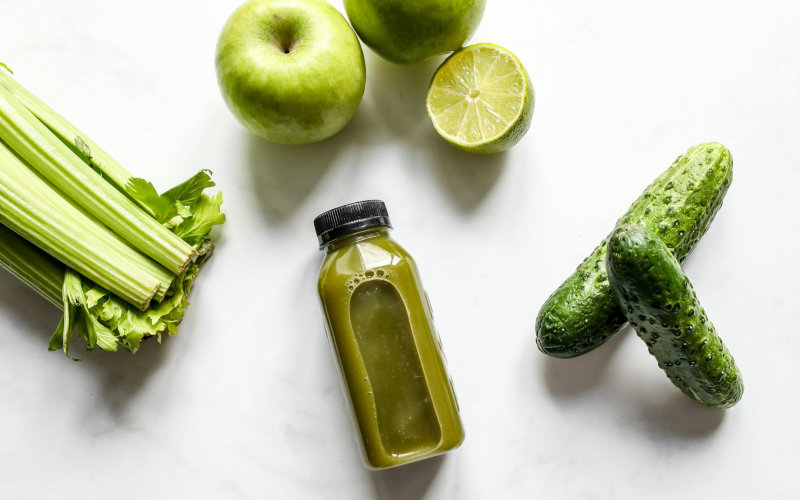
And juice cleanses. I know. They feel healthy. But juicing strips out the pulp and skins. the insoluble fiber, leaving you with basically flavored sugar water. Smoothies are genuinely better because they keep the fiber intact.
What I’d Actually Do
Skip the $1.80 billion colon cleanse supplement industry (yes, that’s the 2026 market estimate, per Coherent Market Insights). Most of those products. laxatives, herbal capsule cleanses, have weak scientific backing and can cause dehydration, electrolyte imbalances, or dependency if overused, as Healthline noted in its May 2026 update.
Instead: add one cruciferous vegetable to dinner four nights a week. Get a container of plain kefir. Eat a pear. Swap one processed snack for a handful of walnuts or a tablespoon of flaxseed stirred into oatmeal.
Your colon isn’t broken. It just needs better raw material to work with.
Photo by Polina Tankilevitch on Pexels

