
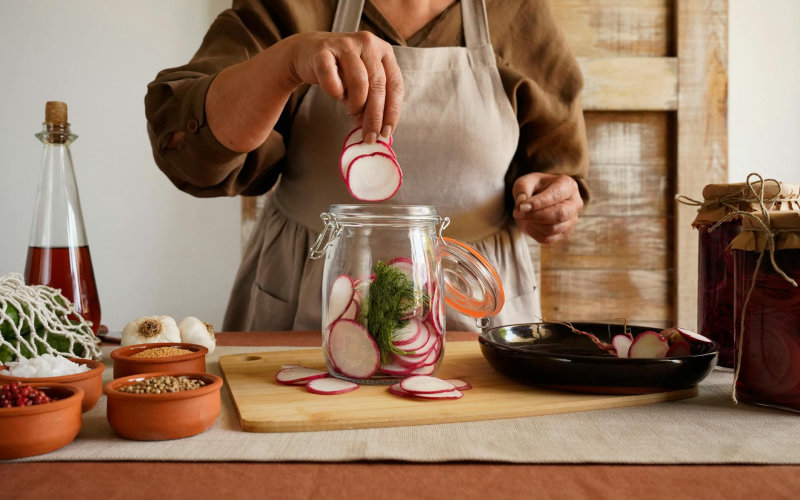

I’ve spent a stupid amount of money on probiotic supplements over the years. Embarrassing, genuinely. Then I started making my own fermented foods—kimchi, kefir, water kefir—and suddenly everything I thought I knew felt shaky.
So here’s what I’ve picked up after years of trying both, digging into actual research, and talking to people who really understand gut microbiome science (not just influencers rocking lab coats for Instagram credibility).
This isn’t a clean “one is better” verdict. It’s messier than that. And I think you deserve the complicated, honest version.
What’s Actually IN Your Probiotic Supplement
Most over-the-counter probiotics advertise their contents in CFUs—colony-forming units. A “good” supplement might shout about 50 billion CFUs. Sounds massive, right?
But here’s the thing: a 2019 study published in Cell by researchers at the Weizmann Institute found that many standard probiotic supplements don’t actually colonize the gut in a significant number of people. They just pass through. The bacteria arrive alive, but your existing microbiome is basically hostile to newcomers.
The strains matter too. Most supplements contain Lactobacillus acidophilus or Bifidobacterium lactis—both well-studied, both decent. But you’re working with maybe 3 to 11 strains total. Your gut naturally hosts somewhere between 300 and 500 different bacterial species. Do that math yourself.
Shelf stability is another problem nobody mentions. Probiotics die. Heat, moisture, time—all of it works against them. That bottle sitting on your bathroom shelf next to a warm shower? Probably nowhere near as potent as the label claims by month three.
What Homemade Fermented Foods Actually Bring to the Table
Real fermented foods are a different animal entirely. A cup of homemade sauerkraut can contain anywhere from 1.5 trillion to 10 trillion CFUs—and those figures come from a 2016 analysis in Functional Foods in Health and Disease, not a marketing deck. That’s not a typo. Trillion.
But CFU counts aren’t even the main story. Homemade kimchi, for instance, contains wild strains of Lactobacillus plantarum, L. brevis, and Leuconostoc mesenteroides—strains you won’t find in any supplement bottle. These bacteria evolved alongside fermented vegetables. They’re competitive colonizers. They know how to fight for real estate in your gut.
Your homemade kefir—especially when you’re using live grains—also introduces yeast species into the picture. Saccharomyces cerevisiae and others. Supplements almost never include yeast. But a healthy gut microbiome has fungi in it too, not just bacteria.
And then there’s context. Probiotics in fermented foods arrive wrapped in fiber, organic acids, vitamins. That surrounding matrix genuinely helps them survive stomach acid long enough to matter.
The Cost Reality Nobody Puts Side-By-Side
Let’s just be blunt about money. A quality probiotic supplement—something like Garden of Life Dr. Formulated or Seed DS-01—runs $40 to $60 a month. And you’re theoretically supposed to take it indefinitely.
A head of cabbage costs maybe $2. Salt costs pennies. One batch of homemade sauerkraut lasts two weeks and takes about 15 minutes of actual hands-on effort. Water kefir grains run $10 to $15 once, and then you have them forever—you just keep feeding them sugar water.
So the math isn’t close. Supplements over a year cost you $480 to $720. A fermentation habit costs maybe $50 total, including jars and your initial grain purchase. If you already cook, it just folds into what you’re doing anyway.
When Supplements Actually Make More Sense
Here’s where I have to be fair: sometimes supplements win. No argument.
If you’ve just finished antibiotics—say, a 10-day course of amoxicillin for a sinus infection—you need targeted strains fast, in precise doses, and you probably don’t have a batch of kombucha sitting on your counter ready to go. A supplement with L. rhamnosus GG (the most researched strain for antibiotic recovery, with over 200 clinical trials behind it) makes real practical sense there.
Specific clinical conditions also favor specific strains. VSL#3 has actual clinical evidence for ulcerative colitis management. You can’t replicate that with homemade yogurt—it’s just a different tool.
And honestly? If you hate fermented foods—the sourness, the smell, the texture—forcing kimchi on yourself every day isn’t sustainable. An imperfect habit you actually stick with beats a perfect one you abandon after two weeks.
The DIY Fermentation Pitfalls You Need to Know
Fermentation isn’t foolproof. You can mess it up.
The biggest beginner mistake is skimping on salt. If your sauerkraut doesn’t hit roughly 2% of the vegetable weight in salt, you risk mold growth or bad bacteria establishing themselves before the good ones can take over. It’s not often dangerous, but it’s possible.
Temperature matters too. Somewhere between 65°F and 75°F is your sweet spot. Too warm and fermentation races ahead—you end up with mushy, overly sour results. Too cold and it barely moves at all.
Cross-contamination from dirty hands or unwashed jars can introduce off flavors or kill a batch entirely. Nothing catastrophic, but frustrating. Start with sauerkraut—it’s the most forgiving ferment there is—before you attempt anything more demanding like miso or natto.
How Your Diet Changes Everything
This is the part that gets almost zero attention, and it drives me a little crazy. Both homemade probiotics and supplements work dramatically better when you’re actually feeding the bacteria once they arrive.
Prebiotics—the fiber that gut bacteria eat—come from garlic, onions, leeks, Jerusalem artichokes, slightly green bananas, cooked and cooled potatoes. If you’re spending $50 a month on a probiotic supplement but eating processed food all day, you’re stocking a store with no electricity. The bacteria show up and starve.
A 2022 Stanford study (published in Cell, 36 participants) found that a high-fiber diet combined with fermented foods increased microbiome diversity more than supplements alone. The combination—fermented foods plus prebiotic-rich vegetables—was the standout result.
Your overall dietary pattern isn’t just background noise. It’s the whole context.
Bottom Line
Here’s something I haven’t seen written anywhere else: the real value of making your own fermented foods isn’t only the bacteria. It’s the habit architecture. When you make sauerkraut or kefir at home, you’re also cooking more, buying fresher produce, thinking about fermentation timing—which means you’re automatically eating less processed food. The act of fermenting quietly reshapes your relationship with food before you take a single bite.
Supplements can deliver bacteria. They can’t deliver that.
Use supplements strategically—post-antibiotics, for specific clinical needs, when you’re traveling and your fermentation setup isn’t practical. Build your baseline with fermented foods you make yourself. These two tools aren’t competing with each other. They’re just built for different jobs.
Frequently Asked Questions
How long does it take for homemade probiotic remedies to improve gut health?
Most people notice digestive changes within 2 to 4 weeks of consistent daily consumption. But broader gut health—microbiome diversity, inflammation markers—takes closer to 3 months of sustained habit to shift in any meaningful way.
Can you take supplements and eat homemade fermented foods at the same time?
Yes, and honestly this combination works well. Just don’t take your supplement right before eating sauerkraut or kimchi—the stomach acid from the fermented food could affect survival of those supplement strains. Separate them by an hour or two.
Are homemade probiotics safe for kids?
Generally yes. Yogurt, kefir, and mild sauerkraut are traditional foods that kids across dozens of cultures have eaten for centuries. But high-alcohol ferments like kombucha aren’t appropriate for young children. And if your kid has any immune condition, check with a pediatrician first.
Which fermented food should a complete beginner start with?
Sauerkraut. Every single time. Two ingredients—cabbage and salt—and a mason jar. It’s nearly impossible to completely ruin, and it gives you a real feel for fermentation before you try anything more involved.
This article is for informational purposes only and should not replace professional medical advice.
Photo by hello aesthe on Pexels

