
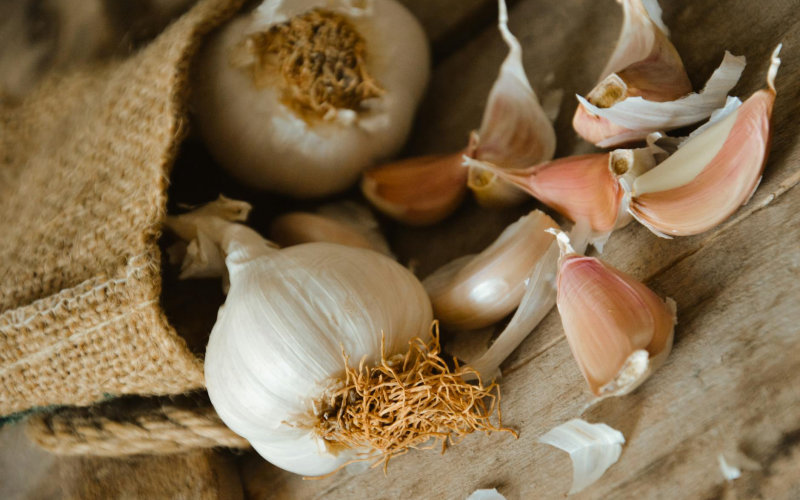

My grandmother kept a braid of garlic hanging in her kitchen year-round. Not for decoration. She’d yank a clove off every time someone started sneezing, and I spent years writing it off as pure superstition — until I actually looked into the history.
Turns out garlic has been used medicinally for over 5,000 years. Egyptian papyrus scrolls from around 1550 BCE — the Ebers Papyrus, specifically — list it in 22 separate healing formulas. Roman soldiers ate it daily for strength and wound prevention. Louis Pasteur confirmed garlic’s antibacterial properties in 1858. So yeah, your grandmother probably knew more than your doctor gives her credit for.
The compound doing most of the work is allicin, which forms when you crush or chop raw garlic. Here’s the part most people skip: you need to let the crushed garlic sit for about 10 minutes before using it. That waiting period maximizes allicin production. Don’t skip it.
1. Raw Garlic and Honey for Coughs and Sore Throats
This one goes back to ancient Ayurvedic medicine, where raw garlic crushed into honey was prescribed for respiratory infections. The pairing makes obvious sense — honey coats and soothes the throat while allicin handles the antimicrobial work underneath.
Crush 3-4 fresh cloves. Let them sit 10 minutes. Mix with 2 tablespoons of raw, unfiltered honey (manuka is ideal, but any raw honey does the job). Take one teaspoon every few hours when symptoms hit.
A 2016 Cochrane review found honey outperformed the cough suppressant dextromethorphan in children. Pair that with garlic’s antimicrobial punch and you’ve got a combination that was quietly working long before written medicine existed.
2. Garlic Infused Olive Oil for Ear Infections
Warm garlic oil in the ear canal is something midwives and herbalists across the Mediterranean have prescribed for centuries. Greek physicians mentioned it. So did traditional Arab healers. The oil softens the ear canal while garlic addresses the bacteria behind the infection.
Making it is straightforward. Warm 2-3 tablespoons of olive oil in a small pan on the lowest heat you can manage, add 2 crushed cloves, let it infuse for about 20 minutes, then strain completely and cool it to body temperature. Two to three drops in the affected ear, two or three times a day.
Important caveat: this is for outer ear infections only. If you suspect a ruptured eardrum or notice fluid draining, skip this entirely and see a doctor. Seriously.
3. Garlic Fire Cider for Immune Support
Fire cider is an old New England folk remedy — herbalist Rosemary Gladstar gets credit for popularizing the modern version in the 1970s, though the underlying concept is older. The garlic version combines raw garlic, horseradish, ginger, onion, and hot peppers steeped in apple cider vinegar for a full four weeks.
Roughly chop a whole head of garlic. Add equal parts grated horseradish and ginger, half a white onion, and some fresh hot peppers into a quart jar. Cover everything completely with raw apple cider vinegar. Seal it. Shake daily for four weeks, strain, and take one tablespoon daily through cold and flu season.
It tastes like something a Viking would respect. But it works.
4. Garlic Poultice for Chest Congestion
Ancient Chinese medicine and European folk healers both applied garlic poultices directly to the chest and back to break up congestion. And this isn’t just old superstition — topical garlic application genuinely allows some allicin absorption through the skin.
Mince 4-6 cloves and mix with enough coconut oil or petroleum jelly to make a spreadable paste. This next part matters: never put raw garlic directly on bare skin for extended periods. It will burn. Apply the paste to your chest or back, cover with a warm cloth, and leave it on for 20-30 minutes maximum.
People have been doing this version of “vapor rub” for roughly 3,000 years. Your store-bought menthol chest rub is the young upstart by comparison.
5. Garlic and Ginger Broth for Digestive Issues
Think of this as the ancestor of your modern bone broth obsession. Traditional healers across East Asia and the Middle East have been combining garlic, ginger, and water — sometimes with turmeric added — to treat bloating, indigestion, and stomach cramps since at least the 10th century.
Simmer 6 crushed garlic cloves and a 2-inch piece of fresh ginger (sliced thin) in 4 cups of water for 20 minutes. Strain it. Add a small squeeze of lemon and a pinch of sea salt. Sip it warm throughout the day when your stomach’s giving you grief.
Allicin has been shown in multiple studies to inhibit H. pylori — the bacteria behind a massive percentage of ulcers. That gives this ancient recipe some very modern scientific credibility.
6. Garlic Tincture for Blood Pressure Support
This one demands patience. Traditional herbalists in Eastern Europe — particularly Poland and Russia — made garlic tinctures by steeping crushed garlic in alcohol for weeks, then taking small amounts daily for cardiovascular health.
Fill a small glass jar with crushed garlic cloves. Cover with 80-proof vodka. Seal it, stash it in a dark cupboard for three weeks, and shake it daily. Strain through cheesecloth. The traditional dose was 10-15 drops in a small glass of water, taken three times a day.
A 2016 meta-analysis in the Journal of Nutrition reviewed 17 separate trials and found garlic supplementation produced meaningful reductions in both systolic and diastolic blood pressure. That’s a lot of trials validating what Eastern European grandmothers already knew.
7. Garlic Oxymel for Respiratory Ailments
An oxymel is a mixture of honey and vinegar — the word comes from ancient Greek, and Hippocrates himself prescribed it. Adding garlic brings a serious antimicrobial layer to an already therapeutic base.
Combine 1 cup raw honey, 1/2 cup raw apple cider vinegar, and 1 whole head of crushed garlic in a jar. Let it steep in the refrigerator for two weeks, shaking it every couple of days. Strain and take one tablespoon when a cough or respiratory irritation flares up.
Hippocrates wasn’t wrong about much. And he specifically recommended oxymel for respiratory conditions around 400 BCE.
8. Garlic Salt Rinse for Gum Disease and Mouth Infections
Roman soldiers rinsed their mouths with garlic preparations before battle — partly ritual, partly practical. Garlic’s antibacterial properties make it genuinely effective against the oral bacteria behind gingivitis and early gum disease.
Crush 2 garlic cloves into half a cup of warm water. Add a pinch of sea salt. Let it steep 10 minutes. Swish for 30-60 seconds and spit. Don’t swallow it. Use this once or twice daily when you’ve got gum tenderness or a mouth sore developing.
Bottom Line
Here’s something I rarely see acknowledged: garlic’s real power in folk medicine wasn’t purely chemical — it was also cultural. Families who reached for garlic remedies consistently were the same families who noticed quickly when someone fell ill, who responded without delay, and who had a treatment ritual already waiting. The act of making something for a sick person — crushing, mixing, warming — that caregiving behavior itself has measurable effects on recovery. The garlic mattered. But so did the fact that someone was paying attention. You genuinely can’t separate those two things when you look at why these traditions outlasted empires.
Frequently Asked Questions
How much garlic is too much for home remedies?
Most herbalists and the available research suggest 2-4 cloves of raw garlic per day is a reasonable ceiling for most adults. Push past that and you’re likely looking at digestive irritation, breath that could clear a room, and potential interference with blood-thinning medications.
Can you use garlic powder instead of fresh garlic in these recipes?
Honestly? No. Not if you want actual therapeutic benefit. Allicin doesn’t form in dried or powdered garlic the same way it does in fresh. You need fresh, crushed or minced cloves — with that 10-minute rest after crushing — to get meaningful allicin content. Garlic powder is a spice. Fresh crushed garlic is the medicine.
Are these garlic remedies safe for children?
Some are, with adjustments. The honey and garlic combination is fine for children over 12 months (never give honey to infants under one year — ever). The garlic broth works well for older kids. The alcohol-based tincture is adults-only, full stop. When in doubt, check with your pediatrician — especially for anything involving ear infections.
Do these remedies replace medical treatment?
No. And I’d be doing you a disservice if I implied otherwise. These are supportive remedies with real historical roots and some solid scientific backing, but they’re not substitutes for antibiotics when you’re dealing with a serious bacterial infection, or for medical evaluation when symptoms are severe or getting worse. Use them for what they actually are: legitimate complementary support with thousands of years of human testing behind them.
This article is for informational purposes only and should not replace professional medical advice.
Photo by Dilara on Pexels

