
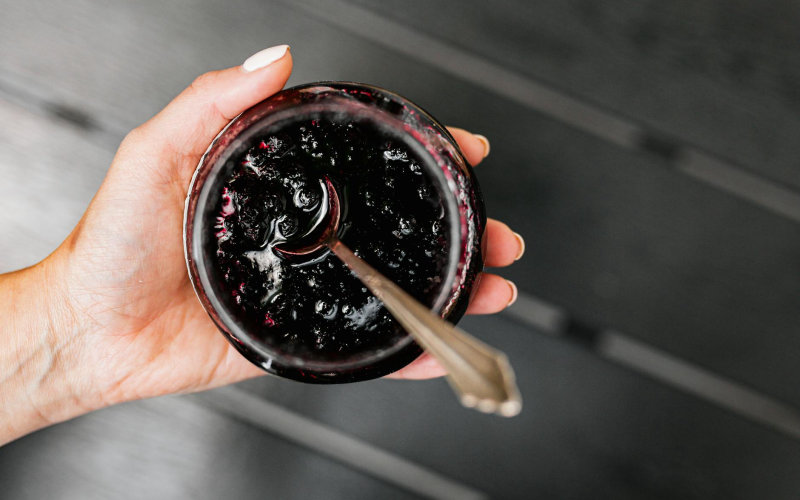

I didn’t start making elderberry syrup because I’m some kind of herbalist. I started because my kid brought home every single virus from her first year of daycare and I was desperate. That was 2014. I’ve made a batch every fall since then, tweaking the ratios, swapping out ingredients, burning one pot badly enough to throw it away (RIP, 2017 saucepan), and eventually landing on something I genuinely trust.
This isn’t a syrup you’ll find in a bottle at Target for $22. It’s better. And you probably have half the ingredients already.
One thing before we dive in — elderberries are not a miracle cure. I want to be upfront about that. But research does suggest they have real immune-supporting potential. A 2016 randomized controlled trial published in Nutrients found that elderberry supplementation cut cold duration by an average of 2 days in air travelers. That’s not nothing, especially in January when you’ve already mentally counted down three weeks until your kid gets sick again.
What You’ll Actually Need
Fresh or dried? Go with dried black elderberries (Sambucus nigra) for a home kitchen. Fresh ones demand more processing and, honestly, tracking them down is a headache unless you grow your own. I use 2/3 cup of dried berries per batch, which yields about 16 ounces of finished syrup.
Here’s your full list:
- 2/3 cup dried black elderberries
- 3.5 cups filtered water
- 1 cinnamon stick (or 1/2 tsp ground)
- 5 whole cloves
- 1 tablespoon fresh grated ginger (dried works too — use 1 tsp)
- 1 cup raw, local honey (added AFTER cooking — this matters)
The honey goes in after cooking because heat above 104°F wipes out a lot of the beneficial enzymes and antioxidants. Don’t skip this step. Don’t pour it in while the pot’s still bubbling. Just wait.
The Actual Recipe, Step by Step
Combine the elderberries, water, cinnamon, cloves, and ginger in a medium saucepan. Bring it to a boil, then drop it down to a simmer. Let it go uncovered for 45 minutes — you want the liquid to reduce by roughly half.
It smells incredible, by the way. Like mulled wine but without the wine. Your whole kitchen fills up with it.
Once it’s reduced, pull it off the heat and let it cool for 10-15 minutes. Then mash the berries with a spoon or the back of a potato masher and pour everything through a fine mesh strainer or cheesecloth into a glass bowl. Press the pulp hard — get every last drop out.
Let the liquid cool until it’s warm but not hot. Somewhere around 90-95°F is fine. Then stir in the honey until it’s fully dissolved.
Pour into a clean glass jar. Done.
Storage and Shelf Life (Don’t Ignore This Part)
Refrigerate immediately. Homemade elderberry syrup — no preservatives, nothing artificial — lasts about 2 to 3 months in the fridge. Some people push it longer, but I stay at 2 months just to be safe. Want to stretch it further? Add 1-2 tablespoons of apple cider vinegar or brandy to the finished syrup. Both work as natural preservatives and neither one wrecks the flavor.
Mark the jar with the date. Seriously. You will forget.
How Much Should You Actually Take?
For adults: 1 tablespoon daily as a general immune tonic, bumping up to 1 tablespoon 3-4 times daily if you’re actively sick.
For kids over 1 year old: 1 teaspoon daily for maintenance, 1 teaspoon every 3-4 hours when sick.
Never give honey — or this syrup — to infants under 12 months old. Botulism risk is real and it’s serious.
My daughter (now 10) gets a tablespoon most mornings from October through March, usually stirred into warm oat milk or drizzled on yogurt. She stopped fighting me on it around age 7 when she decided it tasted like candy. Which it kind of does.
Common Mistakes People Make
Buying the wrong berries is probably the biggest one. American elderberries (Sambucus canadensis) and black elderberries (Sambucus nigra) are both fine. But elderberry seeds, bark, leaves, and roots contain cyanogenic glycosides — compounds that can trigger nausea and vomiting if eaten raw. Only use ripe, properly cooked berries. Boiling neutralizes this. Don’t skip the cooking step trying to preserve more nutrients.
Second mistake: cheap processed honey. The antibacterial and enzymatic properties in raw honey genuinely add to what this syrup does. The stuff in the plastic bear bottle doesn’t have those. Spring for a good local honey if you can find it.
And the third? Reducing it too aggressively. Push it too far and you’ve got a concentrate, not a syrup. Not catastrophic — just thin it with a splash of water — but worth keeping an eye on your liquid levels around the 30-minute mark.
Ways to Use It Beyond Just a Daily Spoonful
Taking it straight is the obvious move. But elderberry syrup is also fantastic stirred into sparkling water with a squeeze of lemon (tastes like a fancy Italian soda), drizzled over pancakes, mixed into vinaigrette for a fall salad, or added to a hot toddy when you’re genuinely miserable and need something warm. My neighbor Sarah started adding it to her morning smoothies back in 2021 and swears she barely gets sick anymore. Correlation, not causation — but she’s enthusiastic about it.
Where to Source Good Elderberries
Mountain Rose Herbs has been my go-to since 2016. Their dried organic black elderberries are consistently good quality, priced around $13-14 for 4 oz — enough for about 3 batches. Starwest Botanicals is another solid option. But avoid random Amazon sellers without third-party testing or clear sourcing information. You really don’t know what you’re getting.
Bottom Line
Here’s the thing nobody tells you about elderberry syrup: the ritual of making it matters almost as much as the syrup itself. When you spend 45 minutes on a cold October Sunday filling your house with the smell of simmering elderberries and spices, you’re also sending a signal to your nervous system — that you’re prepared, that you’re taking care of your household, that winter isn’t something to dread. Chronic stress measurably suppresses immune function. The act of making something nourishing, with your hands, from real ingredients, is its own kind of medicine. I don’t see that written on any product label.
Frequently Asked Questions
Can I use elderberry juice instead of dried berries?
You can, but the syrup won’t be as concentrated and the flavor shifts. If you go this route, use unsweetened pure elderberry juice and cut the water by half. Still use all the same spices — they’re not just for flavor.
Does elderberry syrup really work, or is it just hype?
The evidence is genuinely mixed, but it’s not nothing. Beyond the 2016 Nutrients study, a 2019 meta-analysis in Complementary Therapies in Medicine looked at elderberry supplementation across multiple studies and found significant reductions in cold symptoms. It’s not a substitute for a flu shot. But as a daily tonic alongside good sleep, decent nutrition, and actual handwashing? It earns its place.
My syrup turned out really thin. Did I do something wrong?
Probably just didn’t reduce it long enough. You can fix it — pour it back into the pot without the honey, simmer again until it thickens up, then let it cool and stir in fresh honey.
Can I freeze elderberry syrup to make it last longer?
Yes. Pour it into ice cube trays, freeze solid, then transfer to a freezer bag. Each cube is roughly 1-2 tablespoons, so it’s easy to grab exactly what you need. Thaw overnight in the fridge. It keeps well for 6 months frozen with no noticeable drop in quality.
This article is for informational purposes only and should not replace professional medical advice.
Photo by www.kaboompics.com on Pexels

