

I burned out in 2019. Hard. We’re talking couldn’t-get-off-the-couch, crying-at-commercials, three-cups-of-coffee-and-still-exhausted burnout. My doctor suggested meditation. My mom suggested wine. My herbalist friend Carla suggested I start paying attention to adaptogens.
Three years later, I’ve got a smoothie routine I’d defend to the death. Not because it’s magic — it genuinely isn’t — but these plants have been doing heavy lifting for stressed-out humans for centuries, and modern research is finally catching up to what Ayurvedic and traditional Chinese medicine practitioners figured out ages ago.
Here’s the thing about adaptogens: they don’t sedate you, they don’t hype you up. They help your body calibrate its stress response. And throwing them into a morning smoothie is honestly the most consistent way I’ve found to actually use them. Here are nine I’ve personally tested, with real doses and real expectations.
1. Ashwagandha (Withania somnifera)
This is the one everyone starts with. For good reason.
A 2019 double-blind study published in Medicine followed 60 adults taking 240mg of ashwagandha root extract daily for 60 days. Cortisol dropped 23%. Sleep improved. Stress scores on the PSS (Perceived Stress Scale) fell significantly. That’s not anecdote — that’s controlled data.
Start with half a teaspoon of root powder (roughly 300mg). It tastes earthy, almost like dirt, so blend it with frozen banana, cacao, and almond butter. Trust me on that combo. It buries the flavor completely.
Don’t take it if you’re pregnant or on thyroid medication without checking with your doctor first.
2. Rhodiola Rosea
Rhodiola is my go-to during weeks when deadlines are stacking and I can feel my focus going blurry around the edges.
It works differently than ashwagandha. Where ashwagandha calms the nervous system over weeks, rhodiola is almost immediate — most people feel something within days. A 2009 Swedish study in Planta Medica showed real improvements in stress fatigue and concentration after just 28 days at 576mg daily.
Add about a quarter teaspoon to a citrus smoothie with mango, ginger, and orange juice. The slight bitterness plays well against tangy fruit. And honestly? The mental clarity this one produces is a little startling the first time it kicks in.
3. Holy Basil (Tulsi)
Not the basil on your pizza. Completely different plant.
Holy basil has been central to Ayurvedic medicine for literally 3,000 years — considered an “elixir of life” in Indian traditions. That sounds like marketing copy, but the biochemistry backs up at least some of the reverence. It contains eugenol, rosmarinic acid, and ursolic acid, all showing anti-inflammatory and anxiolytic properties in studies.
A quarter teaspoon in a strawberry-peach smoothie with coconut milk is genuinely pleasant. Faint clove flavor. People always ask what my secret ingredient is.
4. Lion’s Mane Mushroom (Hericium erinaceus)
Technically a functional mushroom, not an herb. But it earns its place here.
Lion’s mane stimulates NGF — nerve growth factor — which plays a role in maintaining and regenerating neurons. A 2010 Japanese study following 30 women over four weeks found those taking lion’s mane cookies (yes, actual cookies) scored significantly lower on depression and anxiety scales versus placebo.
One teaspoon of the powder in a chocolate-banana smoothie. That’s it. You won’t taste it. Your brain might thank you around week two.
5. Reishi Mushroom (Ganoderma lucidum)
Reishi is the slow burn of this list.
It won’t give you energy. It won’t sharpen your focus. What it does — quietly, consistently — is help regulate your immune system and ease the kind of low-grade anxiety that sits in your chest like a stone you’ve stopped noticing. A 2012 study in the Journal of Medicinal Food found breast cancer patients taking reishi extract for four weeks reported better quality of life and meaningfully reduced fatigue and anxiety.
Half a teaspoon in a blueberry-pomegranate smoothie with a little honey. It’s slightly bitter, so lean into sweeter fruit. Give it six weeks before you write it off.
6. Maca Root (Lepidium meyenii)
Maca is from Peru. Grows at 14,000 feet in the Andes. Peruvian farmers have been eating it for energy and endurance for 2,000 years.
Modern research shows maca helps balance hormones — especially relevant if your stress is showing up as hormonal chaos (irregular periods, low libido, mood swings). A 2008 Australian clinical trial published in Menopause found maca significantly reduced psychological symptoms in postmenopausal women compared to placebo.
One teaspoon with cacao, banana, and a pinch of cinnamon. It tastes slightly nutty, almost butterscotch. No masking required — this one’s actually good.
7. Shatavari (Asparagus racemosus)
Most Western wellness circles underrate this one. Badly.
Shatavari is Ayurveda’s primary herb for female vitality and stress resilience, but research suggests it deserves anyone’s attention. Its active compounds — shatavarins — are steroidal saponins that appear to modulate the HPA axis (your stress response system) similarly to ashwagandha, but with a gentler quality.
Half a teaspoon in a coconut-mango smoothie. Mild flavor. Easy to love.
8. Schisandra Berry (Schisandra chinensis)
This one’s a little unusual. Schisandra berries supposedly carry five flavors simultaneously — sweet, sour, salty, bitter, pungent — which in traditional Chinese medicine means it acts on all five organ systems.
What studies actually show: a 2009 paper in the Chinese Journal of Integrative Medicine found schisandra extract improved mental performance and physical endurance under stress. It’s particularly solid during stretches when chronic stress is also physically punishing you.
Use dried schisandra berry powder, a quarter teaspoon, in berry smoothies. But start small — the flavor is assertive and takes some getting used to.
9. Eleuthero (Siberian Ginseng)
Not true ginseng, but similar territory. Eleuthero has a serious track record in Russian sports medicine. Soviet-era researchers studied it extensively through the 1960s and 70s for improving athletic performance and stress adaptation in cosmonauts and Olympic athletes.
Half a teaspoon in an apple-ginger smoothie with spinach. Earthy, slightly sweet. Good for mornings when you need steady energy without the cortisol spike caffeine brings.
Bottom Line
Here’s something I haven’t seen anyone say directly: the reason most people quit adaptogenic herbs after two weeks isn’t taste or cost — it’s that they’re measuring the wrong thing. They’re waiting to feel different. But adaptogens raise your floor, not your ceiling. You’ll only notice they’re working when you realize, sometime around week six, that the thing that would’ve unraveled you in March barely registers in September. That’s the real metric. Not mood today. Resilience over time.
Frequently Asked Questions
Can I mix multiple adaptogenic herbs in one smoothie?
Yes, but start with one at a time. Introduce something new every one to two weeks so you can actually notice how each herb affects you individually. Once you know how you respond, combining two or three is completely fine — and pretty standard in traditional herbal practice.
How long before I notice results from adaptogens?
Most people start noticing changes somewhere between two and six weeks of consistent daily use. Rhodiola tends to work faster (sometimes days). Reishi and shatavari are slower builds. Don’t judge any adaptogen before the six-week mark.
Are adaptogenic herbs safe during pregnancy?
Most adaptogens — including ashwagandha, rhodiola, and schisandra — aren’t recommended during pregnancy. Some, like shatavari, are traditionally used for pregnancy support in Ayurveda, but talk to a qualified herbalist or OB before taking anything.
What’s the best time of day to drink an adaptogenic smoothie?
Morning works best for most people, especially with energizing options like rhodiola, maca, and eleuthero. Reishi and ashwagandha can go morning or evening. I personally do mine at 7am before coffee — and I’ve noticed the coffee hits differently afterward. Smoother. Less jittery. Worth trying.
This article is for informational purposes only and should not replace professional medical advice.
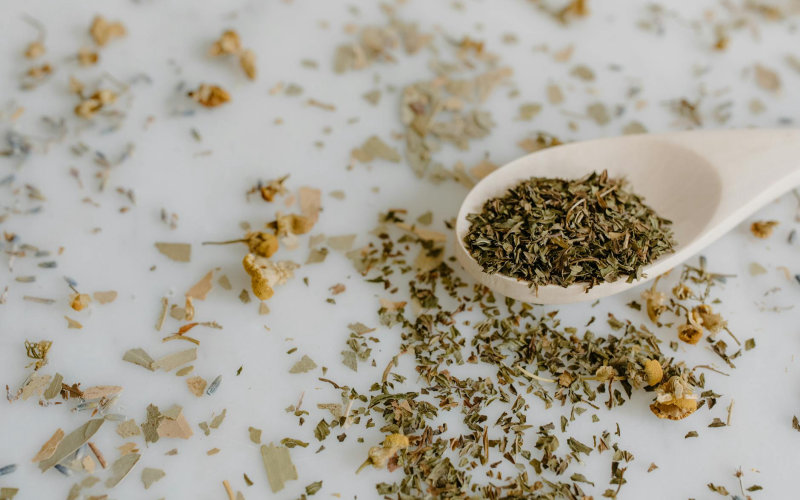
Photo by Tara Winstead on Pexels

