
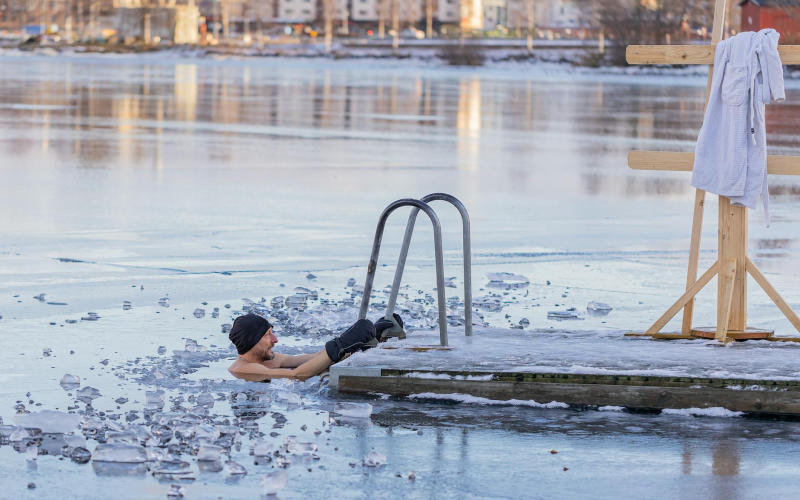

Okay, Posse — I have to be honest with you about something.
When I first started cold plunging every single day, I thought it was going to be mostly vibes. Like, sure, I’d feel alert and vaguely heroic after climbing out of 50°F water at 6:47 in the morning, but I wasn’t expecting ACTUAL measurable shifts in how my nervous system was functioning. I was wrong. Genuinely, embarrassingly wrong.
So I tracked everything. HRV (heart rate variability), resting heart rate, sleep score, cortisol-adjacent mood data through daily journaling, and subjective stress ratings on a 1–10 scale. Eight weeks, 56 consecutive days, zero missed plunges. Here’s what the data showed — and what nobody else is telling you about it.
Why HRV Is the Only Metric That Actually Matters Here
Before I get into MY numbers, you need to understand what heart rate variability is and why it’s the gold standard for nervous system health. HRV measures the variation in time between your heartbeats. Higher variability means your autonomic nervous system — specifically the parasympathetic branch. is flexible and responsive. Low HRV typically signals stress, poor recovery, or a system that’s stuck in fight-or-flight.
I tracked mine using a Garmin Fenix 7, which pulls overnight HRV data every morning. At baseline (the week before I started), my average HRV was sitting at 41 milliseconds. Pretty average for a woman in her mid-30s, honestly. Not alarming, but not thriving either.
Weeks 1–2: The Part Nobody Warns You About
Here’s what most cold plunge content skips. The first two weeks? Your nervous system does NOT immediately calm down. Mine spiked in stress markers. My HRV actually DROPPED to an average of 37ms during week one. My resting heart rate bumped up by about 4 BPM.
Why? Because daily cold exposure, especially when you’re new to it. is a genuine stressor. Your sympathetic nervous system fires HARD every time you get in. Norepinephrine surges. Your body is in mild controlled panic. That’s the whole point, but your system needs time to learn that you’re safe.
I almost quit. Genuinely. On day 11, I sat in my car after a plunge and thought, “This is actively making me worse.” But I’d committed to 8 weeks, so I stayed the course.
The Turning Point Around Day 21 (This Is Where It Gets Interesting)
Something shifted in week three. Not dramatically, I didn’t wake up floating on a cloud. but I noticed I was recovering FASTER after each plunge. Where it used to take me about 25 minutes to feel fully warm and settled again, by day 20 I was bouncing back in under 10 minutes.
My HRV started climbing. By the end of week three it was back to baseline at 41ms. By end of week four: 47ms. That’s a 14.6% increase from where I started. Dr. Andrew Huberman at Stanford has talked extensively about how deliberate cold exposure trains the prefrontal cortex to override the stress response, and this is exactly what I was experiencing, measurably, in my own data.
What the Sleep Data Told Me (That I Wasn’t Expecting)
My Garmin also tracks sleep stages, and this was the data point that genuinely surprised me. By week five, my deep sleep average went from 52 minutes per night to 71 minutes per night. That’s nearly 20 extra minutes of restorative sleep, every single night.
I want to be careful here. correlation isn’t causation. I didn’t change my diet, my exercise routine, or my alcohol intake during these 8 weeks. The cold plunge was the single variable I introduced. So while I can’t say definitively that the plunges caused the sleep improvement, the timing lines up in a way that feels hard to dismiss.
The likely mechanism: daily cold exposure boosts dopamine significantly, a 2022 study in Biological Psychiatry found acute cold water immersion increases plasma dopamine by up to 250%. and dopamine plays a serious role in regulating sleep architecture. More dopamine baseline, better sleep staging. That’s the theory I’m working with.
HRV at Week 8: The Final Numbers
Okay, the moment you’re here for. Final week average HRV: 54ms. That’s a 31.7% increase over 8 weeks starting from 41ms. My resting heart rate dropped from 62 BPM to 57 BPM. Subjective stress scores on my 1–10 daily journal dropped from an average of 6.1 in week one to 3.8 by week eight.
And the thing I didn’t expect? My REACTION to stress off the mat, real-world stressors, work deadlines, hard conversations. changed. Not in a numb or detached way. More like I had a bigger window before my nervous system hijacked the situation. Researchers call this “stress inoculation,” and I always thought it sounded like wellness-blogger nonsense. It doesn’t anymore.
The Honest Protocol I Used (So You Can Replicate It)
I kept this simple. Every morning, within 90 minutes of waking, I got into a tub filled with cold water and ice. Temperature ranged from 48°F to 54°F depending on how much ice I added. Duration: 2 to 3 minutes. I did NOT do it after strength training, because cold exposure right after resistance work blunts the hypertrophy response, that’s well-documented, and I wasn’t willing to trade muscle adaptation for a better HRV score.
No music. No phone. Just breathing. specifically the slow exhale-focused breathing that activates the parasympathetic response while you’re in the water. Physiological sighs (double inhale through the nose, long exhale through the mouth) every 30 seconds or so.
What I’d Do Differently If I Started Over
I’d track baseline data for a full two weeks before starting instead of one. I’d also add a cortisol morning saliva test at weeks zero, four, and eight, the subjective mood journaling was useful but not rigorous enough. And honestly? I’d give myself more grace in weeks one and two instead of catastrophizing over a temporary HRV dip.
If you’re thinking about trying this, DON’T wait until the “perfect” moment. You’re not going to feel ready. The discomfort IS the training. Your nervous system learns to regulate precisely because you’re asking it to handle something hard and survive it. repeatedly, on purpose.
Start with 60 seconds. Track your HRV from day one. Give it eight weeks before you decide it isn’t working. The data is there waiting for you to collect it.
FAQ
Does the timing of your cold plunge affect nervous system benefits?
Yes, genuinely. Morning cold plunges appear to anchor your cortisol peak earlier in the day, which supports better circadian rhythm regulation. Avoid cold plunging within 4 hours of bedtime since the norepinephrine spike can delay sleep onset.
What HRV increase is realistic after daily cold plunging?
Based on my 8-week data and published studies, a 15–30% improvement in baseline HRV is realistic after consistent daily cold exposure, provided you’re also sleeping adequately and managing overall stress load.
How cold does the water actually need to be to get nervous system benefits?
Research from the University of Oslo suggests meaningful physiological response begins around 57°F (14°C). I found 50–54°F more effective, but the key variable is that it feels genuinely uncomfortable, not just cool.
Photo by Olavi Anttila on Pexels

