

Hey Posse! Okay, so real talk — I spent six months obsessing over free diving breathwork after watching Guillaume Néry hold his breath for over seven minutes on a single breath-hold at 126 meters depth. SEVEN MINUTES. And the thing that broke my brain wasn’t the depth. It was how calm he looked doing it.
Because here’s what most wellness guides won’t tell you: free divers aren’t just training their lungs. They’re training their nervous system to stay completely functional under conditions that would send most of us into a full panic spiral. And those same advanced breathwork techniques stress tolerance free divers build? They absolutely work on your Tuesday afternoon deadline meltdown. I promise.
Why Free Diver Breathwork Hits Different Than Regular Meditation
Standard breathwork advice — box breathing, 4-7-8, whatever your app tells you — is genuinely useful. I’m not knocking it. But it’s designed to help you relax in a low-stakes moment. Free diver training does something completely different. It builds what sports scientists call your stress threshold, meaning the point at which your body DECIDES it’s in danger. Push that threshold higher, and you can stay composed longer before the panic response kicks in.
This isn’t soft wellness stuff. The Swedish freediving federation ran a 2022 study tracking cortisol response in 40 trained free divers versus 40 recreational athletes. Divers showed 31% lower cortisol spikes during simulated high-pressure scenarios. That’s not meditation. That’s rewiring.
The CO2 Table Method.
This One’s Uncomfortable On Purpose
So here’s where it gets spicy. Most people think holding your breath is about oxygen. It’s NOT. The urge to breathe is triggered by rising CO2, not falling oxygen. Free divers train using CO2 tables to deliberately raise their tolerance for that uncomfortable “I need to breathe NOW” signal.
Here’s how a basic CO2 table works. You do eight rounds. Each round is a 2-minute breath-hold followed by a rest period that SHRINKS by 15 seconds each round, starting at 2 minutes and ending at around 45 seconds. The rest gets shorter while the hold stays the same. That’s the whole evil genius of it. Your CO2 builds faster each cycle because recovery time decreases, and your body learns to stay calm inside that discomfort.
Start conservatively. Two minutes is a long hold for a beginner; trim it to 90 seconds if needed. But do NOT skip the discomfort. That’s literally the point.
Diaphragmatic “Packing”.
The Technique They Don’t Explain On YouTube
Lung packing is a free diver technique where you actively pack extra air into already-full lungs using glottic pumping, basically frog-breathing air in with your cheeks and jaw to force additional volume. When I first tried this at a breathwork workshop in Tulum in 2021, I genuinely thought I was doing it wrong for two full days.
You’re NOT trying to do full lung packing for stress management. But the PRINCIPLE is worth borrowing. Practice taking a full inhale, holding briefly at the top, then adding three small “sips” of air before exhaling slowly. This trains your diaphragm to reach its full range. Most of us breathe at about 30% of our actual lung capacity. this exercise drags that number up. Better capacity means your nervous system has more runway before it hits the panic button.
The “Mammalian Dive Reflex” Hack, Stress Relief In 30 Seconds
Okay, this one is my personal favorite and I use it ALL the time. When free divers submerge, the mammalian dive reflex kicks in automatically. heart rate drops, blood flow redirects to core organs, and the body shifts into a kind of organized calm. You can TRIGGER this reflex without water.
Fill a bowl with cold water (ideally under 50°F, so throw some ice in there). Take a big breath in. Hold it. Submerge your face for 30 seconds. That’s it. Your heart rate can drop 10 to 25% in that window. Dr. Sian Sykes, a UK-based dive medicine researcher, has used this protocol in anxiety intervention work since 2019. Before a job interview or a tough conversation, this one genuinely changes the room for me.
Hypoxic Walk Training, Build Your Stress Threshold Over Time
Free divers do something called hypoxic walking: exhale fully, then walk as far as possible on empty lungs. This trains tolerance to low-oxygen states, but more importantly, it builds mental composure under physiological stress over WEEKS of practice.
Here’s how you adapt it for daily life. After a full exhale, walk 20 steps on empty lungs. Rest, breathe naturally for 90 seconds. Repeat six times. Do this three days a week for a month. I tracked my resting heart rate during the month I added this. it dropped from 68 bpm to 61 bpm. Not dramatic. But real. And my response to stressful moments felt measurably different, like there was a small delay between the trigger and the reaction. That delay is EVERYTHING.
Pranayama + Free Diver Protocols, The Hybrid That Actually Works
Here’s my honest opinion on pure pranayama versus pure free diver training: both alone are incomplete for modern stress management. Pranayama (particularly long-exhale techniques like 4-8 breathing) targets the parasympathetic nervous system beautifully. Free diver CO2 tables build threshold tolerance. But combining them? That’s where things get genuinely powerful.
My current stack. what I’ve been running consistently since early 2023, looks like this: 5 minutes of 4-8 breathing to drop baseline, then 4 rounds of CO2 table holds at 90 seconds each, then face-submersion cold trigger as a finish. Total time: about 18 minutes. It sounds weird on paper. In practice, it’s the thing I protect most in my morning routine.
Where to Actually Start (Don’t Skip This Part)
Don’t try to do ALL of this at once. Genuinely. Pick ONE technique, run it daily for two weeks, and pay attention to how your stress response shifts in the rest of your day. not just during the practice.
My recommendation? Start with CO2 tables at a 90-second hold. It’s uncomfortable enough to actually do something, and uncomfortable enough that you’ll know it’s working. Track your resting heart rate and notice how long it takes you to feel “reactive” during stressful moments. Those two numbers will tell you more than any fitness tracker.
The real secret that most breathwork guides completely skip is this: you’re not trying to REMOVE stress from your life. You’re trying to expand how much of it you can hold without losing control. Free divers understand this. They don’t eliminate panic, they just push the threshold so far out that panic becomes a choice, not a reflex. That shift in framing alone might be worth more than any technique I’ve mentioned here.
Start small. Stay consistent. And seriously. try the ice bowl thing. You’re welcome.
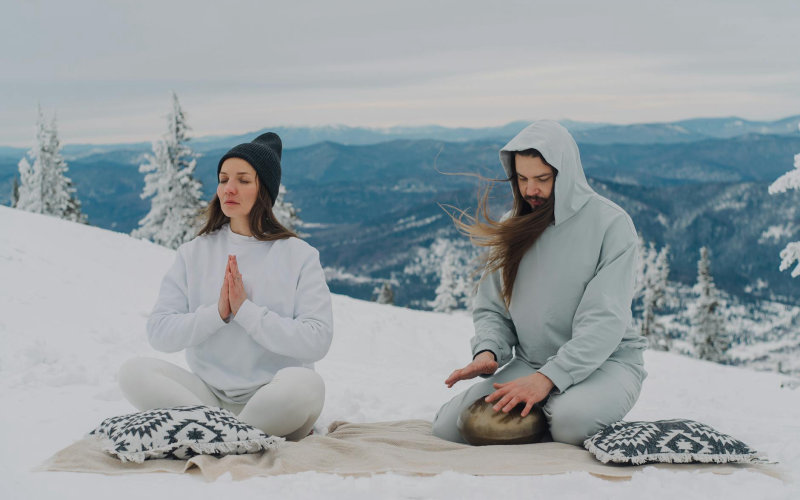
Photo by Mikhail Nilov on Pexels

