

The Research Evidence Is Pretty Underwhelming
Okay, Posse — I need to talk about something that’s been flooding my Instagram feed for the last three years. Every wellness influencer and their holistic nutritionist is out here telling you to eat pumpkin seeds in the first half of your cycle and flaxseeds in the second half, and somehow your hormones will magically rebalance. It sounds AMAZING. It also sounds too convenient to be true.
Because here’s the thing — I dug into the actual research on this. And what I found was not what I expected. Not “seed cycling is a scam,” exactly. But also… not what the wellness world is selling you. Not even close.
What Seed Cycling Actually Claims to Do
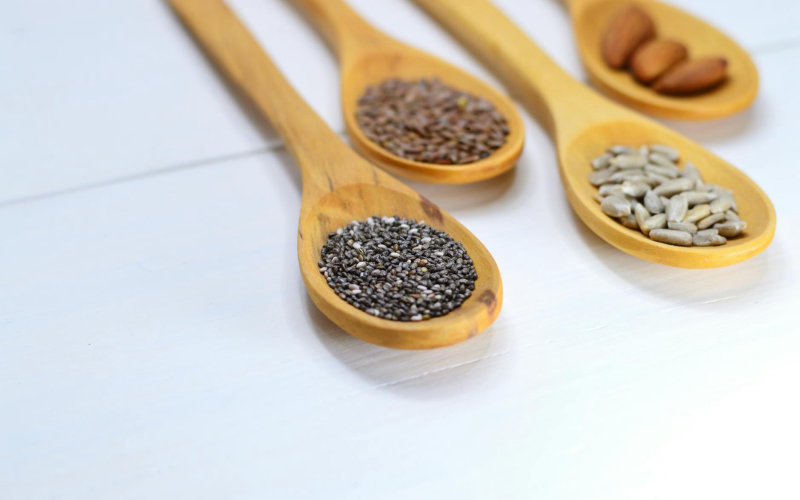
The basic pitch goes like this: during the follicular phase (days 1–14 of your cycle), you eat one tablespoon each of ground flaxseeds and pumpkin seeds daily. During the luteal phase (days 15–28), you switch to sesame and sunflower seeds. The claim is that specific lignans and fatty acids in each seed type support estrogen production in the first phase and progesterone in the second.
Sounds logical, right? Seeds contain phytoestrogens. Phytoestrogens interact with estrogen receptors. Therefore, seeds balance your hormones. It’s a tidy little story with just enough real science mixed in to feel credible.
But tidy stories and peer-reviewed evidence are very different things.
Here’s What the Actual Research Does (and Doesn’t) Show
So I went looking for clinical trials on seed cycling specifically. You know what I found? Almost nothing. As of 2024, there is no published randomized controlled trial that has tested seed cycling as a protocol for hormone balance in women with or without hormonal conditions. Not one. The entire trend — which has millions of people grinding seeds into their smoothies every morning. is built on zero direct clinical evidence.
Now, to be fair, there IS research on individual ingredients. Flaxseed lignans have been studied in the context of breast cancer risk and menopausal symptoms. A 2007 study published in the Journal of Clinical Endocrinology & Metabolism found that flaxseed supplementation lengthened the luteal phase in some participants. That’s genuinely interesting! But that’s not the same as saying “flaxseed balances your hormones according to what phase of your cycle you’re in.”
The leap from “flaxseeds affect some hormonal markers in some conditions” to “rotating seeds across your cycle will fix your PMS, PCOS, or irregular periods” is enormous. And nobody has actually tested whether that leap holds.
The PCOS Problem Nobody Mentions
This one really gets me. Because seed cycling gets marketed AGGRESSIVELY at women with PCOS, one of the most common hormonal conditions affecting roughly 1 in 10 women of reproductive age. And PCOS involves genuinely complex hormonal disruptions: elevated androgens, insulin resistance issues, irregular ovulation.
The idea that tablespoons of seeds will meaningfully shift those dynamics is, honestly, a stretch. Not because nutrition doesn’t matter for PCOS. it absolutely does, and there’s solid research on things like low-glycemic diets, inositol supplementation, and omega-3s. But seed cycling specifically? No trial. No dose-response data. No evidence it works for women who aren’t ovulating regularly enough to even follow the protocol.
And here’s the part that bothers me most: when something doesn’t work for someone with PCOS, they often blame themselves. “I wasn’t consistent enough.” “I used whole seeds instead of ground.” Meanwhile, the actual answer might just be that the protocol wasn’t evidence-based to begin with.
So Why Does Everyone Swear It Worked for Them?
This is the part where I want to be genuinely fair, because I know SO many women who say seed cycling changed their cycles. And I don’t think they’re lying. I think a few things are happening simultaneously.
First, the placebo effect is real and measurable. When you believe a intervention will help your body, it often does, at least modestly. Second, most people who try seed cycling also clean up their diet in other ways at the same time: more whole foods, less processed junk, better sleep tracking. Those changes DO have evidence behind them. Attributing all the improvement to the seeds is a bit like crediting your new running shoes for losing 15 pounds when you also changed your diet.
Third. and this is the uncomfortable truth, hormonal symptoms can fluctuate naturally. If you start seed cycling during a rough hormonal patch and things improve two months later, the timeline FEELS causal. But correlation and causation are different animals.
What Actually Has Research Behind It
Let’s talk about what the evidence does support for hormonal balance, because I don’t want to just tear something down without giving you something real to grab onto.
Magnesium supplementation has multiple trials showing benefits for PMS symptoms. Vitex (chasteberry) has more clinical evidence than anything in the seed cycling protocol. Omega-3 fatty acids. yes, the ones in flaxseeds, but at clinical doses, show genuine anti-inflammatory effects relevant to hormonal health. A 2011 study in Reproductive Health found that omega-3 supplementation significantly reduced dysmenorrhea (painful periods) compared to placebo.
And the most boring but most validated answer? Reducing chronic stress, improving sleep quality, and stabilizing blood sugar through consistent meals. Unglamorous. Not Instagram-able. But actually tested.
What I Think You Should Do
Look. I’m not here to shame anyone for trying seed cycling. Seeds are genuinely nutritious. Adding flaxseeds to your diet every day isn’t going to hurt you, and it might help in small ways that have nothing to do with cyclical rotation. But I think the wellness world does real damage when it oversells unproven protocols to women who are genuinely struggling with painful, disruptive hormonal symptoms.
If your periods are irregular, your PMS is debilitating, or you’ve been told you have PCOS or estrogen dominance, you deserve more than wishful thinking. You deserve a conversation with an endocrinologist or an OB-GYN who actually runs bloodwork and looks at YOUR hormone levels.
Use seeds as a delicious, nutritious food. Just don’t use them as a medical protocol.
The Honest Truth
Here’s where I land on this: seed cycling isn’t dangerous. It’s just not what it claims to be. And in a wellness space full of $80 moon-phase journals and expensive adaptogens backed by vibes, I think we have to hold the line on what “evidence-based” actually means. especially when the people being marketed to are women dealing with real, sometimes serious hormonal conditions.
You’re smarter than the algorithm that keeps pushing seed cycling at you. And your hormones deserve better than a trend that nobody has actually tested.
FAQ
Is there any scientific evidence that seed cycling works?
As of 2024, no clinical trial has tested seed cycling as a protocol. Individual ingredients like flaxseed lignans have some research behind them, but the specific seed cycling rotation has not been studied directly.
Can seed cycling hurt you?
Probably not for most people. Ground flaxseeds are nutritious and generally safe. If you have a thyroid condition, though, large amounts of raw flaxseed may interfere, worth checking with your doctor.
What should I try instead for hormonal balance?
Magnesium, omega-3 fatty acids at clinical doses, and vitex (chasteberry) all have more direct clinical evidence than seed cycling. Addressing sleep and blood sugar stability also has solid backing.
Photo by Miguel Á. Padriñán on Pexels

