

Okay, so here’s something I need to get off my chest — I spent YEARS wondering why my homemade pasta sauce never tasted as good as my Italian neighbor Maria’s. Same recipe. Same tomatoes. Same everything. Except one day I watched her cook, and I noticed she wasn’t grabbing a dusty McCormick jar from the spice rack. She was pinching herbs from a small cloth bag she’d ordered from a farm in Calabria. That was my wake-up call.
And honestly? It should be yours too.
Because grocery store dried herbs quality problems are way more serious than most cooking guides will admit, and the difference between a flat, forgettable dish and something genuinely spectacular often comes down to exactly THIS.
Why Your Spice Rack Is Basically a Graveyard
Let’s talk about what’s actually happening inside those little glass jars at your local supermarket. Most grocery store dried herbs sit in a warehouse, then on a truck, then on a shelf — sometimes for 12 to 18 months BEFORE you even buy them. Add another year of sitting in your cabinet at home, and you’re essentially seasoning your food with fragrant dust.
The volatile oils in herbs — thymol in thyme, carvacrol in oregano, linalool in basil. those compounds are what actually deliver flavor. But they don’t last forever. Once an herb is dried and packaged, that chemical clock is ticking fast. A 2022 study from the University of Bologna found that commercially packaged dried oregano loses up to 60% of its primary flavor compounds within 8 months of processing.
Sixty percent. Gone. Before you even open the jar.
The Label Says “Dried Herbs”, But What Does That Really Mean?
Here’s the part that genuinely frustrates me. So many grocery store herb blends are bulked up with stems, seeds, and filler material. not just the aromatic leaf parts you actually want. Pick up a jar of cheap dried parsley sometime and look CLOSELY. Half of what you’re seeing is pale stem fragments.
Some brands also irradiate their herbs to extend shelf life. Not inherently dangerous, but it does degrade flavor compounds significantly. And in the U.S., there’s no requirement to disclose the specific irradiation process on the label, so you’re flying blind.
But wait, it gets worse. “Italian seasoning” blends at big-box stores are often assembled from the cheapest available crops, sometimes sourced from five different countries, ground, blended, and repackaged. You have absolutely no way of knowing how fresh ANY individual component was when it went into that mix.
What Fresh vs.
Quality Dried Actually Tastes Like
I’m going to be real with you: I tested this myself last winter with a simple white bean soup. Same recipe, same olive oil, same everything. except I made one batch with a $2 grocery store rosemary jar and one with rosemary I’d ordered from Burlap & Barrel (a small-batch spice company out of New York, founded in 2017). The difference was not subtle. The Burlap & Barrel version was almost piney and citrusy with a warmth that lingered. The grocery store version tasted like I’d added dried grass. My husband took one bite of each and immediately pointed at the right bowl.
Real quality dried herbs should smell INTENSE when you open the container. Like, aggressively so. If you open a jar and you have to really concentrate to detect the fragrance? That herb is dead. Toss it.
So Where Should You Actually Buy Dried Herbs?
This is where I want to give you REAL answers, not vague advice. Here are the sources I actually use and trust.
Small-batch spice companies like Burlap & Barrel, Diaspora Co., and Oaktown Spice Shop sell herbs that are typically processed within a few months of harvest. Diaspora Co.’s turmeric from India is genuinely unlike anything in any grocery store. Penzeys Spices, around since 1957, with retail locations across the U.S.. is another solid, more accessible option, and their herbs are reasonably priced for the quality you’re getting.
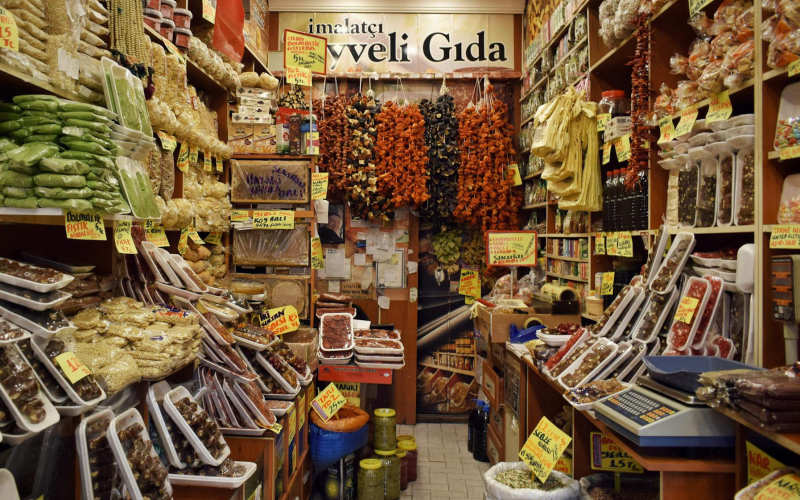
Ethnic grocery stores are criminally underrated for dried herbs. Middle Eastern, South Asian, and Eastern European markets often source herbs directly from regions where they’re traditionally grown, with faster turnover than a suburban Kroger spice aisle. And usually cheaper, too.
Growing and drying your own sounds intimidating but isn’t. I started drying my own thyme and mint in 2021 by hanging small bundles in my kitchen window. Takes about 10 days. Costs almost nothing. And honestly, that homegrown dried thyme is better than anything I’ve ever bought.
The Worst Offenders in Your Spice Cabinet Right Now
Not all herbs degrade at the same rate. Some are catastrophically bad from grocery stores, others are okay. Here’s the honest breakdown.
OREGANO and THYME are the worst offenders when grocery-store sourced, they’re so commonly adulterated and so dependent on volatile oils that the cheap versions are basically decorative. BASIL from grocery stores is almost always flavorless. Like, completely. I’ve stopped buying it entirely and only use fresh or homegrown dried.
BAY LEAVES are a special case. The California bay laurel used in most U.S. packaged bay leaves is actually a different plant species than Mediterranean bay laurel. and about three times as intense. So ironically, the grocery store version might be overpowering rather than weak. Something to know before you add four leaves to your braise.
Dried CHILI FLAKES hold up reasonably well, as do whole dried spices like cumin seeds and coriander seeds. Buying whole and grinding yourself? Even better.
The “Use By” Date Is Basically Meaningless
Look, I know you’ve been checking those dates and feeling good about it. Stop. Dried herbs don’t “expire” in any food-safety sense, so manufacturers set those dates almost arbitrarily, often 2 to 3 years out from packaging. That tells you almost nothing about actual flavor potency. The real test is always the smell test. Open the jar. Crush a pinch between your fingers. If it doesn’t hit you immediately with something fragrant and specific? You don’t have herbs. You have colored powder.
The Honest Truth
The uncomfortable reality is that grocery store dried herbs quality problems aren’t going to be fixed by a new brand or a fancier label design. The whole supply chain. from mass harvest to long-term storage to wide retail distribution, is just fundamentally incompatible with preserving the volatile compounds that make herbs worth using at all.
My actual advice? Spend $20 and order a few jars from Burlap & Barrel or Penzeys this week. Make the same dish you made last week. You’re going to be genuinely shocked. And then, whenever you can, grow at least two or three herbs yourself. Basil, thyme, rosemary. they’re not hard. They just need a window and some water. Your recipes will thank you in a way no amount of technique ever could.
Photo by Berna on Pexels

