
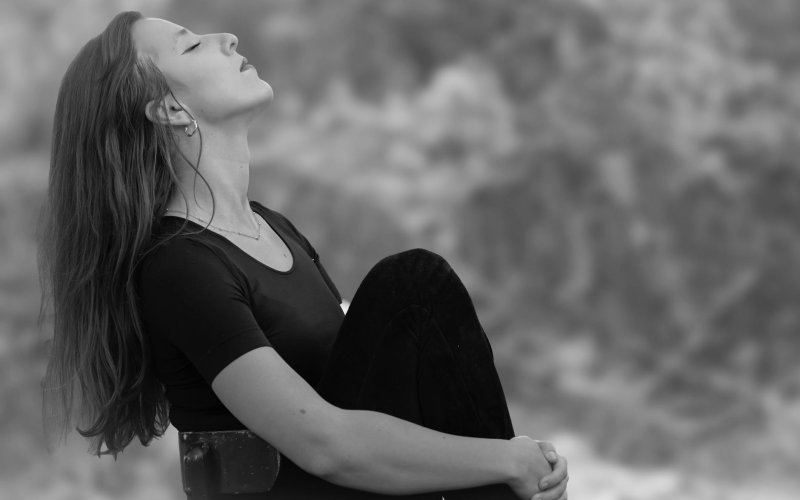

Okay, Posse. Can we talk about something for a second?
You know that moment — it’s 2pm, your inbox is a dumpster fire, your shoulders are basically touching your earlobes, and someone just casually asks you to “just relax.” And you want to scream. I’ve been there. A LOT. But here’s the thing I discovered after years of trying every stress hack out there: the 4-7-8 breathing technique is the ONE tool I keep coming back to, because it’s the only one I’ve seen work fast enough to actually matter in those moments.
And no — I’m not talking about just “taking a few deep breaths.” This is a specific, clinically-observed protocol that triggers your parasympathetic nervous system and measurably reduces cortisol. There’s a difference. A BIG one.
Why Cortisol Is the Real Problem Here
Cortisol is your body’s primary stress hormone. When it spikes — and it spikes constantly if you live a modern, high-pressure life. it doesn’t just make you feel anxious. It wrecks your sleep, tanks your immune system, and messes with your metabolism. A 2023 study out of Stanford’s Department of Psychiatry found that controlled cyclic breathing lowered salivary cortisol markers significantly faster than mindfulness meditation alone.
So yeah. This matters.
The 4-7-8 method was popularized by Dr. Andrew Weil, an integrative medicine physician who’s been teaching it since the early 2000s. He describes it as a “natural tranquilizer for the nervous system.” That’s not hype. That’s the science of respiratory rate slowing your heart rate and signaling your brain to cool it.
What You Actually Need Before You Start
Nothing fancy. Seriously, no app, no candle, no $300 meditation cushion required.
Find a chair or sit on the floor. Your back should be reasonably straight, not rigid like you’re at a military inspection. You want your chest open so the breath can actually move. I usually do this sitting at my desk when things get chaotic, and it works just fine.
One thing that matters: you need to place your tongue against the ridge of tissue just behind your upper front teeth. Keep it there the entire time. This sounds weird, but it controls the airflow and is actually what makes the technique work the way it’s supposed to.
The Exact 4-7-8 Protocol, Step by Step
Here’s the full sequence. Don’t rush it.
Start by exhaling completely through your mouth. Make an audible whoosh sound. Get all the air out. Now begin:
Inhale through your nose for exactly 4 counts. Slow and controlled. Fill your lungs from the bottom up. belly first, then chest.
Hold your breath for 7 counts. This is the part most people mess up. Don’t cheat the hold. That 7-second pause is where the magic happens, your body is absorbing oxygen and your heart rate is starting to drop.
Exhale completely through your mouth for 8 counts. Make that whoosh sound again. Full release.
That’s one cycle. Do FOUR cycles in a row. The whole thing takes about 90 seconds your first time, and maybe 2.5 to 3 minutes once you slow your counting down as you get comfortable with it.
The Science Behind the 7-Second Hold
This part is genuinely cool and I don’t want you to skip past it.
When you hold your breath for 7 seconds after a full inhale, you’re triggering what’s called the Hering-Breuer reflex. a neural mechanism that reduces respiratory rate and signals the vagus nerve. The vagus nerve is basically your body’s chill-out superhighway, running from your brainstem down through your heart and gut. When it gets activated, cortisol production slows. Fast.
Dr. David Spiegel at Stanford, the same researcher behind a landmark 2023 cyclic breathing study. found that just a few minutes of controlled breath-holding patterns could alter physiological stress markers in real time. Not after weeks of practice. Right away.
So when you hold that breath? You’re not just pausing. You’re actively hacking your nervous system.
Common Mistakes That Kill the Results
I’ve taught this to friends, colleagues, and honestly anyone who’ll listen, and the same mistakes come up constantly.
Mistake one: counting too fast. Your counts should take roughly one second each. Most people count like an auctioneer when they’re stressed. Slow. It. Down.
Mistake two: shallow inhales. If you’re only breathing into your chest, you’re leaving 60% of your lung capacity unused. Belly breathing isn’t just for yoga class, it’s what makes this technique drop your cortisol instead of just making you feel like you’re doing something.
Mistake three: stopping after one cycle. One cycle helps. But research suggests the compounding effect of four back-to-back cycles is what pushes your cortisol response into genuine reduction territory. Don’t tap out early.
When to Use This (and When NOT To)
The best times? Right before a stressful meeting. When you wake up at 3am with racing thoughts. After a conflict. Before you fire off an email you’ll regret. I personally use it every single morning before I check my phone. it takes 3 minutes and sets a completely different tone for the day.
But here’s my honest take: don’t use it while driving. Some people feel slightly lightheaded their first few times, especially on the exhale. That passes after a week of practice, but start seated and stationary until you know how your body responds.
Also, if you have asthma or respiratory issues, check with your doctor before adding breath-hold protocols. The technique is safe for most people, but that 7-second hold isn’t something to push through if you’re already working with compromised lung capacity.
What Most Guides Get Wrong About This
Most articles tell you the 4-7-8 method is a “relaxation technique.” And sure, it relaxes you. But framing it that way undersells it completely.
This isn’t just about feeling calmer in the moment. Done consistently. even just once a day for two weeks, the technique starts to lower your baseline cortisol levels. Not just your acute stress response. Your resting stress load. That’s a different outcome entirely, and it’s why I think of this less like a stress hack and more like a daily physiological reset.
The first time I committed to doing four cycles every morning for 14 days straight, I genuinely noticed I was reacting differently to things that used to spike my anxiety. Less reactive. More clear. It wasn’t dramatic or mystical. It just worked.
Start today. Four cycles. Three minutes. That’s the whole ask.
FAQ
How quickly will I feel the cortisol reduction from 4-7-8 breathing?
Most people notice a shift in calm and clarity within a single session, especially after all four cycles. Measurable cortisol reduction in research settings shows up within 3 to 5 minutes of controlled breathing practice.
Can I do 4-7-8 breathing more than once a day?
Absolutely. Dr. Weil recommends starting with two sessions daily. once in the morning, once before bed. Don’t do more than four cycles per session for your first month.
Does the counting speed actually matter?
Yes, it genuinely does. Faster counting compresses the hold and exhale phases in ways that reduce the parasympathetic activation you’re going for. Aim for roughly one second per count.
Photo by Jan Brndiar on Pexels

