
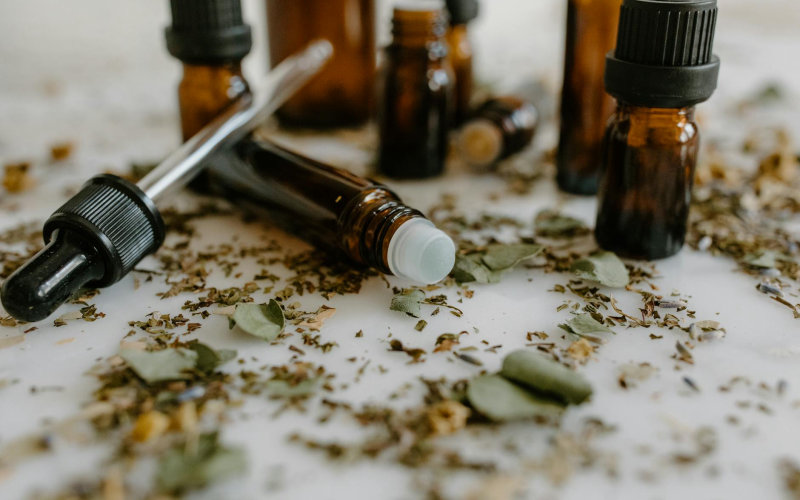

I’ve had migraines since I was nineteen. Not the “oh my head hurts” kind—the hide-under-a-blanket, can’t-look-at-your-phone, please-close-the-blinds kind. So I’ve tried basically everything short of medieval trepanning. And somewhere around year three of that fun adventure, a friend who’d studied aromatherapy in Edinburgh handed me a small tin of something she’d made herself. Rubbed a little on my temples. Twenty minutes later, I was a convert.
That was 2011. I’ve been making my own version ever since.
This balm won’t cure a migraine—I want to be straight with you about that. But for tension headaches? The low-grade pressure that builds behind your eyes after staring at a screen all day? This stuff is genuinely, almost embarrassingly good. Four ingredients. Fifteen minutes. You probably have two of them sitting in a cabinet right now.
Why These Four Ingredients Actually Work
Before you make anything, you deserve to know why it works. Not just “peppermint is cooling” as if that actually explains something.
Peppermint essential oil contains roughly 40-55% menthol. That menthol activates your skin’s cold-sensing receptors—specifically TRPM8 receptors—which interrupts pain signal transmission. A 1996 study published in Cephalalgia tested peppermint oil against acetaminophen on tension headache sufferers and found the oil performed comparably to the medication across a 30-minute window. That’s not nothing.
Eucalyptus essential oil brings 1,8-cineole into the mix, a compound with legitimate anti-inflammatory properties. Research published in Evidence-Based Complementary and Alternative Medicine in 2010 showed cineole inhibited several inflammatory pathways in human cell studies. When tension headaches come from muscle tightness around your skull, reducing inflammation in that tissue actually matters.
Beeswax gives the balm its solid consistency so it stays where you put it instead of dripping into your eyebrows. And the carrier oil—I use fractionated coconut oil, but more on that below—dilutes the essential oils to a safe concentration and helps them absorb into skin rather than just sitting on the surface doing nothing.
The Four Ingredients You Need
Here’s your shopping list. Specific brands matter less than quality, but I’ll tell you what I actually buy.
Beeswax pellets — Get pellets, not blocks. Blocks are a nightmare to measure and melt evenly. I use Sky Organics beeswax pellets from Amazon, about $14 for a pound, which will last you approximately forever. You need 2 tablespoons for this recipe.
Fractionated coconut oil — This stays liquid at room temperature, unlike regular coconut oil, which means your balm won’t turn grainy and weird in winter. Regular coconut oil will work if that’s what you’ve got. You need 3 tablespoons.
Peppermint essential oil — Please buy from a reputable company. Plant Therapy or Rocky Mountain Oils are both solid choices with third-party GC/MS testing. You need 20 drops.
Eucalyptus essential oil — Same sourcing advice. Look specifically for Eucalyptus globulus rather than Eucalyptus radiata if you can—globulus has a higher cineole content. You need 15 drops.
That’s it. Four things.
Equipment You’ll Need
Nothing fancy. Really.
A small glass measuring cup or a heat-safe mason jar. A small pot for a makeshift double boiler. Tiny tins or lip balm containers to pour into—I grab 10-packs of 2oz aluminum tins on Amazon for about $8. A toothpick or wooden skewer for stirring.
That’s genuinely the whole setup.
Step-by-Step Instructions
Start by setting up your double boiler. Fill a small saucepan with about 2 inches of water and bring it to a gentle simmer—not a rolling boil, just a simmer. Set your glass measuring cup inside the pot (or balance it carefully on the rim).
Add your 2 tablespoons of beeswax pellets to the glass cup. They’ll melt in about 4-5 minutes. Watch this part. Don’t walk away. Overheated beeswax discolors and loses some of its texture properties.
Once the wax is completely liquid, add your 3 tablespoons of fractionated coconut oil and stir gently until fully combined. Then pull the glass cup off the heat. Here’s the part people skip—let it cool for a full 2 minutes before you add the essential oils. Adding them to scalding liquid degrades the volatile compounds you’re actually counting on for the therapeutic effect. You’ll basically cook off the good stuff.
After two minutes, add your 20 drops of peppermint and 15 drops of eucalyptus. Stir with your toothpick for about 30 seconds. Work quickly, because the mixture starts solidifying fast.
Pour carefully into your tins. It’ll look pretty liquid at this stage—just leave it alone. It’ll be fully solid in 20-25 minutes at room temperature. If you’re impatient (I always am), 10 minutes in the fridge does the trick.
How to Apply It Correctly
Application matters more than most people realize. A lot of folks slather it across their whole forehead like sunscreen and then wonder why nothing’s happening.
Use a tiny amount—pea-sized, maybe smaller—on your fingertips. Massage it into your temples with small circular motions, apply a thin line along your hairline, and press gently into the base of your skull where your neck meets your head. That suboccipital spot is where tension headache magic actually happens.
Breathe slowly through your nose while you apply it. Inhaling those volatile oils is part of the mechanism, not just a pleasant bonus.
And please—don’t touch your eyes. Menthol near your eyes is a special kind of unpleasant that you won’t forget quickly.
Storage and Shelf Life
This balm will last 12-18 months stored properly. Keep it away from direct sunlight and heat—a bathroom cabinet works fine unless yours gets extremely steamy. Beeswax is a natural preservative, and fractionated coconut oil has a much longer shelf life than most other carrier oils.
If it starts smelling off or rancid, toss it. But honestly? You’ll use it up long before that’s a concern.
Bottom Line
Here’s something I haven’t seen anyone else write about this balm: the act of applying it might be doing as much work as the ingredients themselves. Spending two minutes pressing your fingertips firmly into your temples and the base of your skull while breathing intentionally isn’t just delivery theater—you’re manually disrupting the muscle tension cycle that’s causing the headache in the first place. The balm gives your hands a reason to do therapeutic massage that you’d never bother attempting with bare fingers. So the ritual is the remedy, at least partly. That’s not a flaw in the recipe. It’s probably a feature worth building into your whole approach to headache management.
Frequently Asked Questions
Can I use regular coconut oil instead of fractionated?
Yes, but your balm will be softer in summer and harder in winter because regular coconut oil melts at around 76°F. It still works perfectly fine—just know the texture will vary with the seasons.
How many drops of essential oil are safe?
This recipe comes out to roughly a 2% dilution, which is the standard safe concentration for facial application recommended by the National Association for Holistic Aromatherapy. Don’t be tempted to add more thinking it’ll work better. It won’t, and you’ll just irritate your skin.
Is this safe during pregnancy?
No. Peppermint and eucalyptus essential oils are both contraindicated during pregnancy, particularly in the first trimester. Check with your doctor or midwife before using any essential oil product.
How quickly does it start working?
Most people feel the cooling sensation within about 60 seconds of application. Actual headache relief—in my experience, and from what readers have told me over the years—tends to kick in within 15-30 minutes for tension headaches. If you’re dealing with a severe migraine, this will take the edge off but won’t eliminate it.
This article is for informational purposes only and should not replace professional medical advice.
Photo by Tara Winstead on Pexels

