
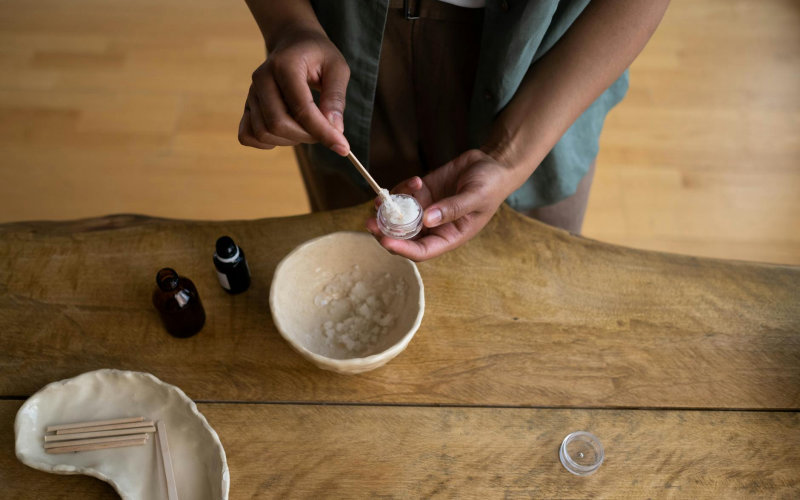

My grandmother kept a small tin of greenish salve on the kitchen windowsill her entire adult life. Calendula, she’d say, tapping the lid. Every scraped knee, every cracked knuckle, every minor burn from the cast iron skillet—that tin got opened. She never called it a recipe. It was just something you made.
I didn’t start making my own until 2014, when I got fed up paying $18 for a two-ounce jar of “artisan healing balm” at a farmer’s market. The woman selling it was perfectly nice, but I knew what went into it—and I knew I could produce six jars for the same money. So I went home, dragged out my slow cooker, and made my first batch. Lumpy. Slightly too firm. I loved it completely.
This guide is for anyone who’s never done this before. No special equipment. No herb shop membership. Just honest, straightforward instruction.
What Actually Goes Into a Healing Salve
Three things. That’s genuinely it. An oil, a wax, and an herb (or a few).
The oil carries herbal medicine into your skin. Olive oil is the classic choice—slow to go rancid, decent absorption, and you probably already have some in the cabinet. Jojoba and sweet almond oil work beautifully too. For a basic salve aimed at cuts and dry skin, I almost always reach for olive oil as my base.
Beeswax is what converts that oil into something solid enough to scoop with your finger. The ratio matters more than most beginners realize. Most recipes land somewhere between 1 tablespoon of beeswax per 4 ounces of oil (soft, almost creamy) and 1 tablespoon per 2 ounces (firmer, almost lipstick-like). For a general skin healing salve, I aim for 1 tablespoon per 3 ounces of oil and adjust from there.
Then there’s the herb. The herb is where the actual healing work happens.
The Three Herbs You Should Start With
Calendula (Calendula officinalis) is the undisputed workhorse here. A 2009 study in the Journal of Clinical Oncology found it outperformed trolamine in preventing acute dermatitis during radiation therapy—which is a serious validation for something your grandmother grew in the garden. It calms inflammation, nudges cellular repair along, and smells faintly golden. Use it for almost anything.
Plantain leaf—common broadleaf plantain (Plantago major), the weed pushing up through your lawn right now—is extraordinary for drawing out splinters, insect venom, and early infection. Herbalist Rosemary Gladstar has called it one of the most underappreciated medicinal plants in North America. She’s not wrong.
Comfrey (Symphytum officinale) is what you reach for with burns and deep tissue bruising. It contains allantoin, which accelerates cell proliferation fast. Almost embarrassingly fast on minor burns. But don’t use it on deep open wounds—comfrey heals surface tissue so quickly it can actually seal infection in if you’re not careful.
How to Make an Infused Oil (The Slow Way and the Fast Way)
Your herb needs to infuse into the oil before anything else happens. The slow way: fill a clean jar with dried herb (dried, not fresh—moisture causes mold), cover completely with olive oil, seal it, and leave it somewhere sunny for 4 to 6 weeks. Shake it every few days. Strain through cheesecloth. Done.
The fast way uses a slow cooker or double boiler. Combine your dried herb and oil on the lowest setting—most slow cookers sit around 100 to 120°F. Leave it for 6 to 8 hours. Strain well.
But here’s something most beginners don’t hear enough: the slow method produces a richer, more potent oil. Heat degrades some of the more delicate plant compounds. If you’re making calendula oil for a baby’s eczema, do the slow method. If you need salve by tomorrow for a cracked heel, do the fast method. Both genuinely work.
The Actual Recipe (Finally)
Here’s my go-to starter recipe. Makes about four small 2-ounce tins.
You’ll need: 1 cup calendula-infused olive oil, 3 tablespoons beeswax pellets (far easier to measure than a block), 10 drops lavender essential oil (optional but lovely), and small metal tins or glass jars.
Melt your beeswax in a double boiler—or a heat-safe glass measuring cup set in a pan of simmering water. Once fully liquid, pour in your infused oil and stir. Pull it off the heat. Add the lavender if you’re using it. Pour immediately into your containers, because it sets faster than you’d expect. Leave lids off until fully cooled (around 30 minutes). Label everything with the date.
That’s it. Your first homemade herbal salve recipe for skin healing is finished.
How to Use It (And What Not to Put It On)
Apply a small amount to clean, dry skin. For minor cuts, let the bleeding stop first and make sure the wound’s been washed. For dry cracked skin—heels, elbows, knuckles—apply at night and pull on socks or cotton gloves over it. You’ll wake up to skin that feels genuinely different.
Don’t use comfrey-based salves on deep puncture wounds or anything showing real signs of infection (redness spreading outward, pus, fever). Salve complements medical care—it doesn’t replace it.
And please, no oil-based salve on serious burns. We’re talking second or third degree. Cool water first. Doctor second. Salve never, for those.
Shelf Life and Storage
A well-made salve kept in a cool, dark spot will last 12 to 24 months. The real enemy isn’t time—it’s water contamination. Never dip wet fingers into your tin. Beeswax is naturally antimicrobial, but it’s not invincible.
I add 400 IU of Vitamin E oil (one pierced gel capsule) per cup of carrier oil before making my salves. It extends shelf life noticeably. Small step, real difference.
Bottom Line
Here’s something I haven’t seen written anywhere else, and it’s taken years of salve-making to fully appreciate: the healing isn’t only in the herb. It’s in the act of making and applying something with intention. There’s emerging research in psychoneuroimmunology suggesting that ritualistic self-care behaviors actually modulate inflammatory response through the nervous system. Your grandmother’s tin worked partly because she trusted it—and that trust, that slow deliberate application, signaled safety to a stressed immune system. The calendula is real. But so is the ritual. Don’t rush this. Don’t slap it on distractedly. The attention you bring is part of the medicine.
Frequently Asked Questions
Can I use fresh herbs instead of dried ones?
No. Fresh herbs contain water, and water in an oil infusion invites bacterial growth and mold within days. Always dry your herbs completely—at least two weeks air-dried, or several hours in a dehydrator at 95°F—before you start infusing.
What if my salve turns out too hard or too soft?
Too hard means too much beeswax. Too soft means too little. The fix is simple: remelt the batch and adjust. Add a little more beeswax for firmness, or a splash more oil to soften it. You can correct it completely without wasting a thing.
Is this safe for children?
Calendula and plantain salves are generally considered very safe for children and are commonly used on babies. Skip essential oils for kids under two. Always patch test on a small area first, and check with your pediatrician if your child has known allergies.
Where do I buy dried herbs if I’m not growing them?
Mountain Rose Herbs (mountainroseherbs.com) has been my go-to since 2015. Bulk Herb Store is another solid option. Both test for pesticide residue and provide sourcing information. Avoid loose dried herbs from Amazon unless the vendor has clear, verifiable origin documentation.
This article is for informational purposes only and should not replace professional medical advice.
Photo by Ron Lach on Pexels

