
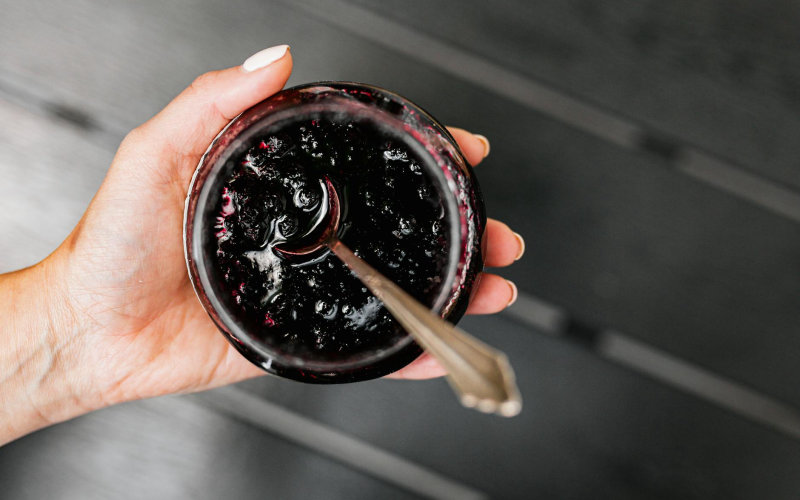

Last winter I watched my neighbor burn through three full boxes of DayQuil while I shook off the same bug in roughly 48 hours. She eventually cornered me and asked what I was doing differently. The answer was sitting in a mason jar in my fridge—a thick, dark, faintly spiced elderberry syrup I’d been brewing at home for years.
I’m not going to sell you on elderberry as some miracle cure. It isn’t. But the science behind it is solid enough that I’d feel genuinely foolish NOT pulling out a batch the second that familiar scratchy-throat feeling creeps in. A 2016 randomized controlled trial in Nutrients found travelers taking elderberry extract had colds lasting an average of 2 days shorter than those who skipped it. Two days shorter. That’s not nothing.
So if you’ve been eyeing those $18 bottles at the health food store and thinking there has to be a better way—there is. Here’s what actually works in my kitchen.
Why Elderberries Are Worth Your Time
Elderberries—specifically Sambucus nigra, the black elder—contain flavonoids called anthocyanins shown to inhibit viral replication. They’re also loaded with vitamin C and zinc. Fresh or dried, these small dark berries are doing genuine biochemical work inside your body.
But here’s something you need to know: raw elderberries are mildly toxic. They contain sambunigrin, a compound that causes nausea and vomiting if you eat the berries straight. Cooking destroys it completely. So skipping the simmering step isn’t an option—not a preference, not a shortcut. It matters.
What You’ll Need (Exact Measurements)
This recipe makes about 16 ounces—roughly a month’s supply if you’re taking it preventatively.
Ingredients:
- 1 cup dried black elderberries (or 2 cups fresh/frozen)
- 3 cups filtered water
- 1 cinnamon stick
- 5 whole cloves
- 1 tablespoon fresh grated ginger (or 1 teaspoon dried)
- 1 cup raw local honey (added AFTER cooking, never during)
For equipment you’ll need a medium saucepan, a fine mesh strainer or cheesecloth, a potato masher or the back of a spoon, and a glass jar with a lid. Nothing fancy required.
I buy my dried elderberries from Frontier Co-op or Mountain Rose Herbs. Quality genuinely matters here—look for berries that are deep purple-black, not brownish or dusty. If they smell faintly musty when you open the bag, toss them and start over.
The Brewing Process, Step by Step
Combine the elderberries, water, cinnamon stick, cloves, and ginger in your saucepan. Bring everything to a boil over medium-high heat.
Once boiling, drop it to a simmer. Let it go for 45 minutes. You’re watching for the liquid to reduce by roughly half—it’ll look almost syrupy even before the honey goes in. Your kitchen is going to smell incredible. Think mulled wine minus the actual wine.
After 45 minutes, pull it off the heat and let it cool about 15 minutes. Then mash the berries hard with a potato masher—you want every last drop of juice extracted. Pour the whole thing through your strainer into a bowl, pressing the berry pulp down firmly.
And here’s where people consistently screw it up. Add your honey ONLY when the liquid has cooled below 95°F (around 35°C). Raw honey heated above that loses its beneficial enzymes and antimicrobial properties. It becomes, essentially, expensive sugar. A thermometer check is absolutely worth those 10 seconds.
Stir the honey in thoroughly, pour into your jar, seal it, and get it into the fridge immediately.
Dosage: How Much to Take and When
I’ve seen a lot of vague handwaving on this topic online. Let me give you something you can actually use.
For prevention during cold and flu season: 1 tablespoon daily for adults, 1 teaspoon daily for kids over 1 year old. And no honey-based products for infants under 12 months—the botulism risk is real and serious.
Already sick? Bump it to 1 tablespoon every 3-4 hours for adults, up to 4 times per day. Don’t go beyond that thinking more is better. It isn’t, with this particular remedy.
Stop once you feel better. Elderberry is an immune stimulant—which means anyone with an autoimmune condition like lupus or rheumatoid arthritis genuinely needs to check with their doctor before using it. I can’t stress that part enough.
Storage and Shelf Life (Don’t Skip This)
Refrigerated, your syrup keeps 60-90 days. Write the date on the lid with a Sharpie the moment you seal it. Do it right now, before you inevitably forget.
Honey acts as a preservative, but it’s not immortal. Any mold (rare but possible), any off smell, any color shift toward grayish-brown instead of deep purple—toss it without hesitation.
Want it to last longer? Freeze it in ice cube trays. Pop the cubes into a zip bag and you’ve got about 6 months. Each cube runs roughly 1 tablespoon, which makes dosing simple.
Boosting the Recipe: Optional Add-ins That Actually Help
Once you’ve nailed the basic recipe a few times, here’s where experimentation gets fun.
Raw apple cider vinegar: Swap out 1/4 cup of the water for ACV. It adds a slight tartness, and some people believe the acidity improves extraction of the active compounds. Honestly, I’ve done it both ways and can’t taste much difference—but I still do it out of habit.
Astragalus root: Toss 1-2 dried astragalus sticks into the simmer pot. It’s an adaptogenic herb used in Traditional Chinese Medicine for immune support. Dr. Andrew Weil has recommended it for years, and a 2020 review in Phytomedicine documented its immunomodulatory effects.
Ceylon cinnamon vs. Cassia: Most cinnamon sitting on grocery store shelves is Cassia, which contains coumarin—fine in small amounts, but worth knowing about. Ceylon cinnamon is gentler and what I use personally. You can find it on Amazon or any decent spice shop.
Common Mistakes That Ruin the Batch
Adding honey while the syrup is still hot. That’s the big one, and it’s shockingly common.
Using American elderberries (Sambucus canadensis) without confirming full ripeness—unripe berries of any elderberry species carry higher sambunigrin levels. Stick with dried black elderberries and you sidestep the problem entirely.
Under-simmering. Forty-five minutes isn’t a rough guideline. At 20-25 minutes you haven’t fully extracted the anthocyanins or neutralized the problematic compounds. Set a timer and walk away.
And please don’t skip the ginger. It’s not just flavor. Ginger carries its own documented anti-inflammatory and antiviral properties—research going back to at least 1992 backs this up. It belongs in this recipe.
Bottom Line
Here’s something I’ve genuinely never heard anyone else say about elderberry syrup: the people who seem to get the most out of it aren’t necessarily the ones who pound it when they’re already miserable—they’re the ones who treat it like a daily ritual from October through March, same as brushing their teeth. One tablespoon every morning with breakfast. It takes 20 seconds. And when something does get through your defenses, your immune system isn’t scrambling from zero.
Frequently Asked Questions
Can I use fresh elderberries instead of dried?
Yes—but use double the amount. Two cups fresh or frozen replaces 1 cup dried, since fresh berries carry significantly more water. Foraging your own? Make absolutely sure you’ve correctly identified Sambucus nigra. Red elderberries (Sambucus racemosa) are a completely different plant and shouldn’t be used here.
Why does my syrup taste bitter?
Usually means you simmered too long and the liquid reduced past the point where natural sweetness balances out. Pull back to 40-45 minutes, and double-check your honey ratio—a full cup per 1.5 cups of finished liquid is the sweet spot.
Is this safe for kids?
For children over 12 months, yes—use 1 teaspoon daily for prevention. Skip it entirely for babies under one year because of the honey. Some parents substitute maple syrup for very young toddlers, though the antimicrobial benefits drop off considerably.
How is this different from store-bought elderberry syrup?
Mainly freshness and what’s actually in it. Products like Sambucol or Zarbee’s often contain preservatives, added sugar, or corn syrup. Your homemade version uses one sweetener (raw honey) and nothing artificial. You control every single ingredient—and a batch costs roughly $4-5 versus $18-22 at retail.
This article is for informational purposes only and should not replace professional medical advice.
Photo by www.kaboompics.com on Pexels

