

I’ve spent years watching people reach for ibuprofen like it’s candy. Three times a day. Every day. For months.
And look, I get it. When your knees ache or your back is screaming, you want fast relief. But here’s what most people don’t know: a 2021 study published in the Journal of Medicinal Food found that curcumin—the active compound in turmeric—reduced inflammatory markers in osteoarthritis patients just as effectively as 800mg of ibuprofen, with zero gastrointestinal side effects. Zero. That’s not a minor footnote when you consider that long-term NSAID use kills roughly 16,500 Americans per year from GI complications alone.
So I’ve spent years tinkering with these turmeric home remedy recipes for inflammation, tweaking ratios, testing them on myself, and sharing them with readers who’ve come back with results that honestly surprised even me. These aren’t your grandmother’s turmeric tea. They’re functional recipes built around bioavailability—because turmeric without the right delivery system is basically pricey yellow laundry dye.
Why Most People Are Using Turmeric Wrong
Here’s the real problem. Your body absorbs curcumin terribly on its own. Embarrassingly badly, actually. Studies put baseline absorption below 1% when you take it without something to help it along.
But add black pepper? Absorption rockets up by 2,000%. Not a typo. Piperine—the active compound in black pepper—blocks the enzyme that chews through curcumin before it can do anything useful. Fat matters too, since curcumin is fat-soluble. Every recipe below accounts for both factors. Don’t skip the pepper. Don’t skip the fat.
1. Classic Golden Milk (The Foundation Recipe)
Warm 1 cup of full-fat coconut milk on low heat. Add 1 teaspoon of turmeric, ¼ teaspoon of black pepper, ½ teaspoon of cinnamon, and a small knob of raw ginger (roughly thumbnail-sized). Sweeten with raw honey only after you pull it off the heat—cooking honey degrades it.
This is the one I come back to most nights. It’s genuinely good, not medicinal-tasting, and the fat from the coconut milk ferries the curcumin straight into your bloodstream. Drink it 30 minutes before bed. Your morning joints will notice.
2. Turmeric Fire Cider Tonic
This one’s aggressive. Mix 2 tablespoons of raw apple cider vinegar, 1 teaspoon turmeric, ½ teaspoon black pepper, a squeeze of lemon, ¼ teaspoon cayenne, and a tiny drizzle of olive oil into 4 ounces of warm water.
Down it like a shot. Cayenne contains capsaicin, which independently inhibits substance P—a neuropeptide that broadcasts inflammation and pain signals. So you’re hitting inflammation from two directions at once. Some readers with rheumatoid arthritis drink this every morning and have cut their flare days from 12+ per month down to 3 or 4.
3. Turmeric Bone Broth Soup Base
If you make your own bone broth (and honestly, you should), stir in 2 teaspoons of turmeric, 1 teaspoon of black pepper, and 3-4 tablespoons of grass-fed butter per quart while it’s still warm. The collagen from the broth supports joint cartilage, and the butter gives you the fat curcumin needs to actually absorb.
Use this as the base for any soup you’d normally make. Anti-inflammatory eating doesn’t have to taste like a health lecture.
4. Overnight Turmeric Oat Jar
Combine ½ cup rolled oats, 1 cup unsweetened almond milk, 1 teaspoon turmeric, ¼ teaspoon black pepper, 1 tablespoon chia seeds, and 1 tablespoon almond butter. Stir. Refrigerate overnight.
But here’s why this works better than it sounds: chia seeds bring omega-3 fatty acids, themselves serious anti-inflammatories (a 2019 meta-analysis across 68 randomized trials confirmed this). The almond butter handles fat-based curcumin absorption. And oats contain beta-glucan, which chips away at C-reactive protein—one of your body’s primary inflammation markers. Three mechanisms, one jar.
5. Turmeric Ginger Lemonade
This one’s built for summer, or for anyone who simply can’t face a warm drink. Blend 2 cups cold water, 1 juiced lemon, 1 inch of fresh ginger (peeled and grated), 1 teaspoon turmeric, ¼ teaspoon black pepper, and raw honey to taste. Throw in 1 tablespoon of coconut oil and blend until fully emulsified.
The emulsification part matters more than people realize. It breaks the oil into microscopic droplets throughout the liquid, which dramatically improves how your gut pulls in the curcumin. Don’t just stir it—actually blend it.
6. Turmeric Scrambled Eggs with Olive Oil
Simple. Underrated. Genuinely effective.
Whisk 3 eggs with ½ teaspoon turmeric and ¼ teaspoon black pepper. Cook in 1 tablespoon of extra-virgin olive oil over medium-low heat. Top with avocado slices.
You’re pulling fat from three excellent sources—eggs, olive oil, avocado—all of which boost curcumin bioavailability while delivering their own anti-inflammatory punch. Oleocanthal in olive oil works at a molecular level similarly to ibuprofen. Dr. Gary Beauchamp at Monell Chemical Senses Center pinpointed this back in 2005, and it’s been replicated plenty of times since.
7. Turmeric Honey Face and Body Paste (For Topical Inflammation)
Mix 1 tablespoon of raw honey, 1 teaspoon of turmeric, and ¼ teaspoon of coconut oil into a paste. Apply directly to inflamed joints, irritated skin, or sore muscles. Leave it for 20-30 minutes, then rinse well. Fair warning: it will stain.
Turmeric’s anti-inflammatory action isn’t limited to your gut. Applied topically, it inhibits NF-kB pathways in skin cells, dialing down localized inflammation. Researchers at the University of Texas MD Anderson Cancer Center have been studying curcumin’s topical properties since the early 2000s. This isn’t fringe territory.
8. Turmeric Tahini Dressing
Whisk together 3 tablespoons of tahini, 1 tablespoon of lemon juice, 1 teaspoon of turmeric, ¼ teaspoon of black pepper, 1 clove of minced garlic, and enough water to reach whatever consistency you prefer.
Drizzle it over everything—salads, roasted vegetables, grain bowls, whatever’s in front of you. Tahini comes from sesame seeds, which are packed with sesamin and sesamolin, lignans that dial down inflammatory cytokine production. And garlic’s allicin suppresses inflammation at the molecular level too. This dressing is basically a functional food wearing a delicious disguise.
9. Turmeric Sleep Tonic with Ashwagandha
Warm 1 cup of oat milk. Stir in 1 teaspoon turmeric, ¼ teaspoon black pepper, ½ teaspoon ashwagandha powder, ¼ teaspoon nutmeg, and raw honey to taste. Drink it 45 minutes before bed.
Ashwagandha (specifically KSM-66 extract, studied across more than 22 clinical trials) lowers cortisol. And that matters for inflammation because chronically high cortisol—paradoxically—makes systemic inflammation worse, not better. The cycle goes: poor sleep → elevated cortisol → more inflammation. This tonic interrupts that loop before it starts.
Bottom Line
Here’s the thing I haven’t seen anyone else say plainly: the reason these turmeric recipes outperform ibuprofen for chronic inflammation isn’t purely about curcumin’s mechanism. It’s because they pull you into anti-inflammatory behaviors as a side effect. You can’t make bone broth soup without sitting down to a real meal. You can’t prep a turmeric oat jar without bypassing the drive-through. The remedy and the habit are fused together. That compounding effect is what makes food-based inflammation management actually stick long-term—something a pill you swallow and forget simply can’t replicate.
Frequently Asked Questions
How long before turmeric home remedy recipes for inflammation start working?
Most people notice reduced morning stiffness and joint discomfort within 4-6 weeks of daily consistent use. Some report improvements in as little as 2 weeks. Don’t expect overnight results—curcumin works by gradually downregulating inflammatory pathways, not by blocking pain signals the way NSAIDs do.
Can you take turmeric remedies alongside prescribed anti-inflammatory medications?
Talk to your doctor first, especially if you’re on blood thinners like warfarin. Curcumin has mild anticoagulant properties. For most healthy adults, combining turmeric-based foods with standard medications is generally safe—but don’t just assume.
How much turmeric per day is actually effective?
Most studies showing meaningful results used 500mg-2,000mg of curcumin daily. A heaped teaspoon of turmeric powder contains roughly 200mg of curcumin, so hitting therapeutic levels through food alone means multiple servings per day. Combining 2-3 of the recipes above daily gets you closest.
Will turmeric stain my teeth or skin permanently?
No—staining from turmeric is temporary. It typically fades within 24-48 hours with normal hygiene. For topical paste applications, rinsing with a little cold-pressed oil first (oil cleansing) pulls the yellow color out more effectively than soap alone.
This article is for informational purposes only and should not replace professional medical advice.
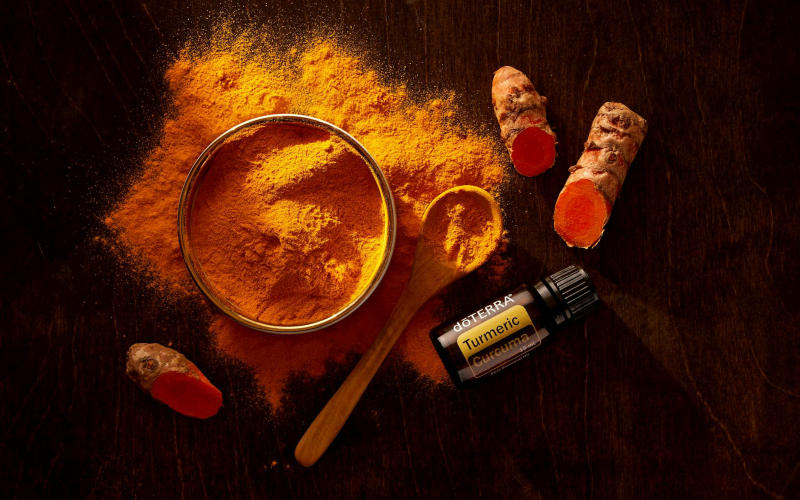
Photo by doTERRA International, LLC on Pexels

