

Hey Posse! Okay, I have to be honest with you about something.
Most nervine blend recipes you find online are basically… just lists. Dump some passionflower in. Add some lemon balm. Throw in a little skullcap. Done. And look — those blends aren’t terrible. But they’re also not working as HARD as they could be, because whoever wrote the recipe skipped the part that actually matters: synergy ratios.
This is the stuff I wish someone had told me back in 2016 when I was first mixing nervine formulas and wondering why one batch would genuinely calm my nervous system while the almost-identical next batch did basically nothing. Turns out, it wasn’t the herbs. It was the RATIOS.
What “Nervine Synergy” Actually Means (And Why Most Blends Miss It)
Here’s the deal. Synergy in herbal blending isn’t just “these herbs go well together.” It’s a specific, intentional relationship between three functional layers — your primary nervine, your potentiator, and your grounding anchor. When those three layers hit the right ratio, the blend amplifies. When they’re off, the herbs work against each other or just flatline.
Herbalists like David Hoffmann and Rosemary Gladstar have written about this concept for decades, but somehow it gets boiled down to vague advice like “combine relaxing and stimulating herbs.” That’s not a formula. That’s a guess.
So let’s talk about what a real nervine herbal blend formula synergy actually looks like.
The Three-Layer Framework You Need Before You Measure Anything
Layer one is your PRIMARY nervine. This is the star — the herb doing the heaviest nerve-calming work. Think passionflower, valerian, or skullcap. This herb gets the highest portion of your blend, typically 40–50% of the total formula weight.
Layer two is your POTENTIATOR. This herb doesn’t calm the nervous system directly. It amplifies the primary nervine’s action. Lemon balm is the classic here. So is milky oats (Avena sativa). These herbs improve bioavailability and reduce the body’s resistance to relaxation. Your potentiator should sit at 25–35% of the blend.
Layer three is your GROUNDING ANCHOR. This is what most recipes completely leave out, and it’s honestly the biggest mistake I see. Without a grounding anchor, nervine blends can make some people feel floaty or even more anxious. especially folks who are already running hot. Ashwagandha root, tulsi, or even a small addition of hawthorn berry works beautifully here. Your anchor takes up the remaining 15–25%.
A Real Formula: The 4:2.5:1.5 Ratio Explained
Let me give you something concrete you can actually use today.
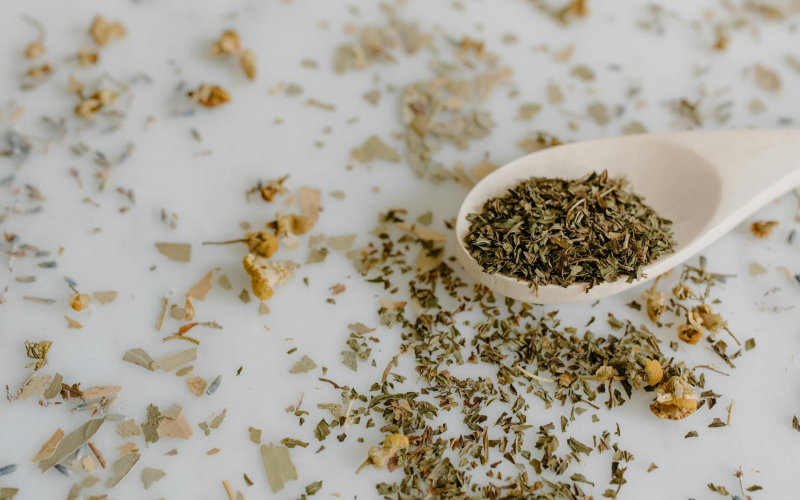
Say you’re building a 1-ounce dry herb blend. Using the 4:2.5:1.5 ratio, you’d measure roughly 0.5oz passionflower (primary), 0.31oz lemon balm (potentiator), and 0.19oz ashwagandha root (anchor). That’s it. That’s a complete nervine formula.
Now, and this is where it gets interesting. that ratio shifts depending on what your PRIMARY nervine is. Valerian, for example, is significantly more potent than passionflower. Drop your primary layer down to 30% and bump your potentiator up to 40%. If you run a valerian-heavy blend at the 40–50% primary rate, you’re going to knock someone flat when they just wanted to stop ruminating at 2am.
Skullcap is even more nuanced. It’s what herbalists call a “trophorestoratives”, it feeds and restores nerve tissue over time rather than sedating acutely. So when skullcap is your primary, you can push it closer to 55% without overwhelming the formula.
How to Choose Your Potentiator Based on the Person, Not the Herb
This is the part that changed how I blend completely. Most recipes choose potentiators based on flavor or tradition. But the smarter move is to choose your potentiator based on the nervous system STATE of the person you’re blending for.
Cold, depleted, exhausted nervous system? Milky oats as your potentiator, every single time. This is the person who’s been running on fumes, who feels numb more than anxious. Milky oats rebuilds. It nourishes.
Hot, wired, overthinking nervous system? Lemon balm. It cools, it quiets mental chatter, and it pairs beautifully with passionflower because both have mild MAO-inhibitory properties that compound gently. A 2019 analysis published in Nutrients found that 600mg of lemon balm extract measurably reduced anxiety scores in a double-blind trial, which lines up exactly with what we see in practice.
Anxious with a digestive component. the “nervous stomach” type? California poppy as your potentiator. Yes, it’s a nervine too. But at 25–30% of the formula, it functions more as a bridge between the gut-brain axis and the primary nervine’s action.
The Ratio Mistake That Makes Nervine Blends Backfire
So here’s the uncomfortable truth most herbal guides skip right over.
Adding MORE of your primary nervine does NOT make the blend stronger in a useful way. Past a certain threshold, usually around 55% of total formula weight. you actually start getting diminishing returns, and in some people, a paradoxical stimulating effect. I’ve seen this happen repeatedly with high-valerian blends, especially in people with a Vata constitution in Ayurvedic terms (anxious, cold, dry, scattered types).
The fix is simple. Stay within your ratio. If you want a stronger effect, don’t increase the primary, increase the WHOLE formula dose.
Tincture vs.
Tea: Do the Ratios Change?
Yes. Slightly. But the framework holds.
For tea blends, you can be looser. the ratios I’ve shared work beautifully as a starting point and the slower extraction rate of simmering or steeping naturally moderates potency. For tinctures, though, you want to tighten up. Drop your primary nervine to the lower end of its range (35–40%) because alcohol extraction pulls MORE active constituents per gram than water does. Push your grounding anchor up a touch, closer to 22–25%. The formula becomes less forgiving at high extraction rates, and the anchor is what keeps the whole thing balanced.
Where to Start
Honestly? Start with the 4:2.5:1.5 passionflower/lemon balm/ashwagandha formula I laid out above. Make it as a tea first. 1 teaspoon of the blended herbs per cup, steeped 10–12 minutes covered. Drink it for 7–10 days and PAY ATTENTION. Not just to whether you feel calmer, but to the quality of that calm. Is it grounded? Is it floaty? Does your digestion feel settled? That feedback tells you exactly which layer needs adjusting.
That’s what makes a nervine herbal blend formula synergy different from just a nervine blend. It’s not set-and-forget. It’s a living formula that you refine. And once you understand the ratio framework, you’ll never look at a list-style herbal recipe the same way again.
Photo by Tara Winstead on Pexels

