
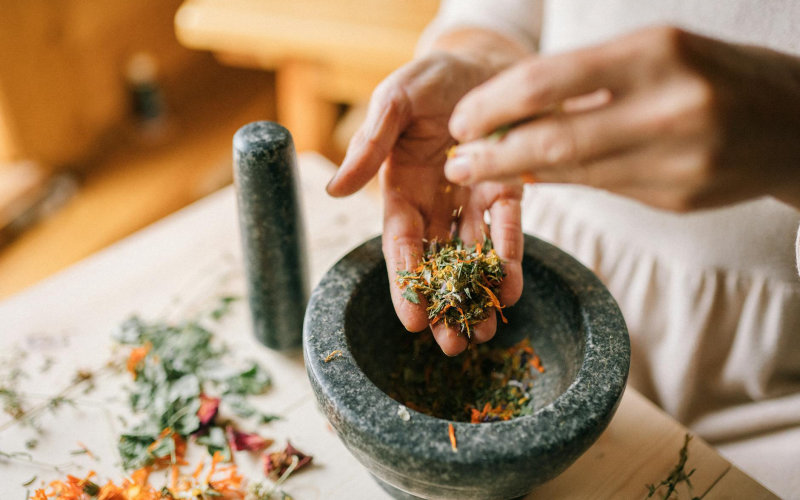

I bought a $34 bottle of echinacea capsules in 2019. Took them religiously through October and November. Got sick anyway—twice. And that experience sent me down a rabbit hole I honestly haven’t fully climbed out of.
Here’s what I eventually pieced together: the problem wasn’t echinacea. The plant genuinely has immunomodulating properties that researchers have studied since at least the 1980s. The problem was what remained of those properties by the time the capsule reached my mouth. Which, it turns out, wasn’t much.
Most people assume the supplement aisle at their local health food store is basically a more convenient version of what an herbalist does at home. It’s not. Not even close. The gap between a freshly made elderberry tincture and a standardized elderberry capsule from a warehouse shelf is roughly the same as the gap between a tomato from your garden and one from a gas station. Same word. Completely different object.
The Oxidation Problem Nobody Talks About
Herbs contain volatile compounds. That word “volatile” is doing real work here—it means they evaporate, degrade, react with oxygen. The moment a plant gets harvested and processed into powder, that clock starts ticking.
A 2018 analysis published in the Journal of Agricultural and Food Chemistry tested 57 commercial herbal supplements and found that over 60% contained significantly lower concentrations of active compounds than their labels claimed. Some had degraded by as much as 80% of stated potency. That’s not a quality control scandal. That’s just physics applied to living chemistry.
When you make chamomile tea from fresh or recently dried flowers at home, you’re getting the apigenin and bisabolol compounds before they’ve had much chance to oxidize. The capsule version, though? That chamomile has typically been ground, tableted, bottled, shipped to a distribution center, shipped again to a store, and sat on a shelf anywhere from six months to two years. By the time you crack it open, you’re basically eating chamomile-scented fiber.
Bioavailability Is Where the Real Story Lives
Even when active compounds survive manufacturing, there’s another hurdle. Bioavailability—your body’s actual ability to absorb and use a compound—gets dramatically shaped by the form the herb takes.
Whole-plant preparations like tinctures (alcohol extractions), glycerites, and decoctions carry what manufacturers call a “synergistic matrix.” I hate that phrase because it sounds like marketing copy, but the concept is legitimate. Plants contain enzymes, fiber, and secondary compounds that help your body process the primary active constituent. Isolate that constituent, compress it into a capsule, and you’ve lost the entire supporting cast.
Take turmeric. Curcumin on its own has notoriously poor bioavailability—around 2-3% absorption according to most pharmacokinetic studies. But when you consume turmeric as a whole rhizome grated into warm milk or broth with black pepper and a fat source, absorption jumps dramatically. Piperine from the pepper and the fat work together to shuttle curcumin through the intestinal wall. Your capsule has none of that context. None.
What “Standardized Extract” Actually Means (And Why It’s Often a Red Flag)
Manufacturers love phrases like “standardized to 5% withanolides.” It sounds rigorous. Scientific. Trustworthy.
But here’s the problem: standardization typically targets one or two marker compounds while everything else in the plant gets ignored or actively stripped away. With ashwagandha, there are over 35 identified withanolides plus alkaloids, saponins, and iron that all contribute to the adaptogenic effect. Standardizing to a single compound and calling it “full-spectrum” is like saying a soup is complete because you can confirm the salt level.
Home preparations don’t require this compromise. When you make a proper ashwagandha decoction—simmering the root in whole milk for 20-30 minutes the way Ayurvedic tradition has done it for literally thousands of years—you’re getting the full chemical profile of that root transferred into a fat-soluble and water-soluble medium simultaneously. No isolation. No standardization theater.
Fresh vs Dried vs Powdered: The Quality Cascade
Not all home preparations are equal either, and I’d be doing you a disservice if I pretended otherwise.
Fresh is best, when you can get it. Dried whole herb is second. Dried powdered herb is a significant step down. A commercial capsule containing dried powdered herb that’s been sitting in a warehouse? Dead last. This matters because a lot of people assume “homemade” automatically beats store-bought—but if you’re buying old, poorly stored dried herb powder from a bulk bin and packing your own capsules, you’re not really winning anything.
The herbs where freshness makes the most dramatic difference are the ones with high volatile oil content: peppermint, lemon balm, fresh ginger, holy basil, lavender. Use these fresh, or within six months of drying if stored properly (airtight, dark, cool). Beyond that window, you’re mostly getting flavor, not medicine.
Three Preparations That Outperform Their Commercial Versions
Fire cider is the clearest example. A commercial fire cider product from a health food store runs about $18-22 for 8 ounces and contains diluted, pasteurized versions of the original preparation. Homemade fire cider—raw apple cider vinegar, fresh horseradish, ginger, onion, garlic, citrus, and hot peppers steeped for four weeks—costs maybe $8 in ingredients and is genuinely a different product in terms of enzymatic activity and sheer pungency.
Elderberry syrup is another one worth making yourself. Research published in 2016 in Nutrients showed elderberry extract reduced flu duration by an average of four days in a group of 312 travelers. But that study used a concentrated preparation, not the watered-down syrup versions most commercial brands sell. Making your own with dried elderberries, raw honey, cinnamon, and cloves produces something far closer to what the research was actually testing.
And oxymel—an ancient honey-vinegar herbal preparation—has almost no commercial equivalent worth buying. Thyme oxymel for respiratory support, rosemary oxymel for circulation. These simply don’t exist in any meaningful commercial form. So you either make them or you miss out entirely.
Bottom Line
Something I haven’t seen written anywhere else: the supplement industry accidentally created a whole population of people who “tried herbs and they didn’t work”—which then became evidence against herbal medicine broadly. But those people didn’t try herbal medicine. They tried the industrialized ghost of herbal medicine. The actual thing, prepared fresh and used within an appropriate time frame, is a genuinely different pharmacological experience. Your great-grandmother wasn’t naive when she reached for the elderberry or the echinacea. She just wasn’t buying it in a capsule.
Frequently Asked Questions
Are homemade herbal preparations actually safe to make at home?
Yes, for the vast majority of common herbs. The main risks are misidentification (always buy from reputable sources if you’re not foraging yourself), basic hygiene during preparation, and knowing which herbs carry real contraindications—like avoiding large doses of licorice root if you have high blood pressure. Start with the basics: chamomile, elderberry, ginger, peppermint. Strong safety records, all of them.
How long do homemade tinctures and preparations last?
Alcohol tinctures made with at least 40% alcohol last 3-5 years when stored in dark glass away from heat. Syrups made with raw honey last 2-3 months refrigerated. Fresh herb teas should obviously be consumed immediately. Oxymels last about a year. Label everything with dates—you’ll genuinely thank yourself later.
Isn’t standardization a good thing for consistent dosing?
In theory, yes. In practice, the narrow focus of standardization means you’re often dosing for one compound while losing the plant’s full profile. For truly critical medical situations, pharmaceutical-grade isolated compounds make sense. For general wellness and preventive use, whole-plant preparations win on breadth of action every time.
Where should I source herbs if I can’t grow my own?
Mountain Rose Herbs and Starwest Botanicals are both well-regarded for quality and sourcing transparency. Local herb farms and farmers markets are even better if you have access. Avoid bulk bins at grocery stores—turnover rates are unpredictable and freshness is anybody’s guess.
This article is for informational purposes only and should not replace professional medical advice.
Photo by Yan Krukau on Pexels

