
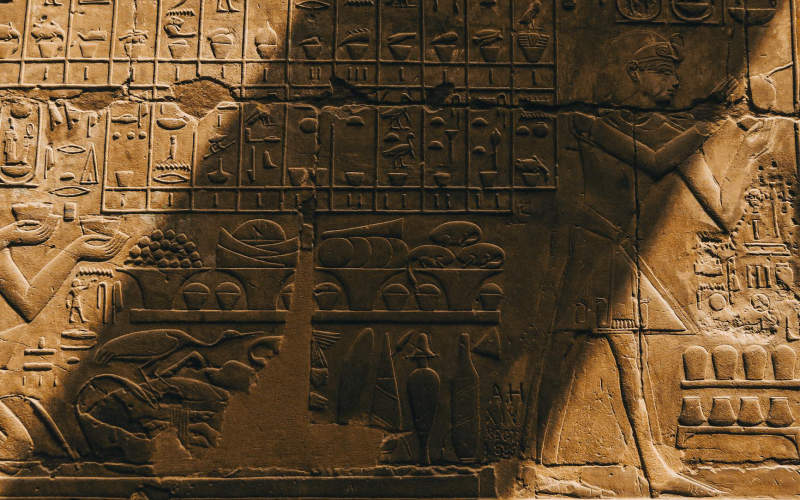

Ancient Egypt wasn’t just pyramids and pharaohs. For thousands of years, Egyptian healers developed one of the most sophisticated herbal traditions in human history, documenting their plant-based treatments on papyri that modern researchers are still studying today.
The Ebers Papyrus alone, dated to around 1550 BCE, lists over 700 plant-based remedies, according to the National Library of Medicine. And right now? Herbalists and researchers are quietly circling back to some of those ancient formulas. Not out of nostalgia, but because the science is actually starting to catch up. So let’s talk about seven ancient Egyptian herbal remedies that deserve a serious second look.
1. Blue Lotus was their stress-relief staple
If you’ve seen ancient Egyptian art, you’ve probably noticed the blue lotus flower showing up EVERYWHERE — in ceremonial scenes, tomb paintings, and offerings to the gods. But the Egyptians weren’t just using it as decoration. According to a 2020 study published in the Journal of Psychoactive Drugs, the blue lotus (Nymphaea caerulea) contains aporphine and nuciferine, compounds that interact with dopamine receptors and may support relaxation and mild mood elevation.
Modern herbalists are increasingly sourcing blue lotus for teas and tinctures, particularly for sleep support. While large-scale clinical trials are still limited, the early pharmacological research is compelling enough that the plant has moved from obscure specialty shops into mainstream wellness retailers.
2. Fenugreek was their all-purpose medicine
Fenugreek seeds appear in the Ebers Papyrus as a treatment for fever, digestive issues, and even as a topical application for skin inflammation. Today, fenugreek (Trigonella foenum-graecum) is one of the better-researched herbs in modern clinical settings. A 2017 meta-analysis published in Phytotherapy Research reviewed multiple trials and found that fenugreek supplementation produced meaningful reductions in fasting blood glucose levels in participants with type 2 diabetes.
That’s a direct line from an ancient remedy to a modern clinical application — and it’s the kind of thing that gets herbalists genuinely excited. The seeds are also rich in soluble fiber, which supports digestive health in a way the Egyptians likely recognized empirically long before fiber was a dietary buzzword.
3. Moringa was their nutritional powerhouse
Egyptian healers valued moringa (Moringa oleifera) leaves for treating skin conditions, swelling, and what ancient texts described as “weakness of the body.” That last application makes a lot more sense when you look at moringa’s nutritional profile. According to research published by the Food and Agricultural Organization of the United Nations, moringa leaves contain seven times the vitamin C of oranges, four times the calcium of milk, and twice the protein of yogurt, gram for gram.
Over the years, moringa has gained significant attention in nutritional medicine, particularly for populations dealing with malnutrition. But modern herbalists are also using it as an adaptogen-adjacent supplement for energy and immune support — applications that mirror what Egyptian healers were doing over 3,000 years ago.
4. Nigella sativa was their “seed of blessing”
Known in ancient Egypt as “habbatus sauda” and sometimes translated as the “seed of blessing,” nigella sativa (Nigella sativa) — or black seed — was reportedly found in the tomb of Tutankhamun. The ancient Egyptians used it for respiratory conditions, digestive complaints, and headaches.
According to a 2019 review in the Iranian Journal of Basic Medical Sciences, the active compound thymoquinone has demonstrated anti-inflammatory, antioxidant, and antimicrobial properties across more than 200 published pharmacological studies. This is one of the ancient Egyptian herbal remedies with the most robust modern research behind it. Black seed oil is now widely available in health food stores, and the research base supporting its anti-inflammatory properties has grown substantially over the past decade.
5. Garlic was their first-line antibiotic
Egyptian workers building the pyramids were reportedly given garlic rations to maintain their strength and ward off illness — a detail recorded by Herodotus in the 5th century BCE and corroborated by archaeological evidence found at Giza. The Ebers Papyrus recommends garlic for heart complaints, parasitic infections, and tumors. Modern science has confirmed that allicin, the active compound released when garlic is crushed, carries genuine antimicrobial properties, according to research published in the Journal of Antimicrobial Chemotherapy. While garlic has never fully disappeared from herbal medicine, contemporary herbalists are revisiting specific Egyptian preparation methods — including raw, crushed applications and fermented preparations — that may preserve more of the active compounds than cooking does.
6. Castor oil was their topical healer
Castor oil appears throughout ancient Egyptian medical texts as a treatment for eye irritation, skin inflammation, and scalp conditions. Archaeologists have even found castor oil residue in ancient Egyptian lamps and burial sites, pointing to how central this plant was to daily life. According to Drugs in Ancient Egypt, a monograph published by the Association for the Study and Preservation of Roman Mosaics, castor oil was one of the most frequently mentioned substances across multiple Egyptian medical papyri.
Modern cosmetic science has validated several of these topical applications. Ricinoleic acid, the primary fatty acid in castor oil, has been shown in clinical studies to carry anti-inflammatory properties that support wound healing and skin hydration. Contemporary herbalists use it for scalp massages, scar reduction, and joint inflammation — applications that would have been familiar to an ancient Egyptian healer.
7. Aloe vera was their wound-care standard
Aloe vera carvings have been found in Egyptian temples, and multiple ancient texts reference it as a treatment for burns, infections, and skin diseases. Cleopatra is widely cited by historians as having incorporated aloe vera into her skincare regimen, though this detail is difficult to verify with primary sources. What is verifiable is that aloe vera was a cornerstone treatment in Egyptian medicine for at least 1,500 years. According to the Indian Journal of Dermatology, modern clinical studies have confirmed that aloe vera gel accelerates wound healing and reduces inflammation, supporting its ancient reputation. Today, aloe vera is so mainstream that its Egyptian origins are easy to forget. However, herbalists working with the whole leaf — rather than processed gel — argue the results are meaningfully different, pointing back to the unprocessed preparations described in ancient Egyptian texts.
The Takeaway The rediscovery of ancient Egyptian herbal remedies isn’t mysticism — it’s researchers and herbalists catching up to empirical knowledge that took centuries to accumulate. Plants like nigella sativa and fenugreek now have peer-reviewed pharmacological research supporting their traditional uses. Others, like blue lotus, are earlier in their research journey but generating genuine scientific interest. The Ebers Papyrus documented over 700 remedies. Modern herbalists have only scratched the surface of what’s in there, and that’s what makes this one of the most interesting corners of botanical medicine right now.
FAQ
Are ancient Egyptian herbal remedies safe to use today?
Most of the plants listed here — garlic, fenugreek, aloe vera, castor oil, and moringa — are widely considered safe for general use and are well-documented in modern clinical literature. Blue lotus and nigella sativa carry fewer long-term human studies, so consulting a qualified herbalist or physician before use is advisable.
Where can I find research on ancient Egyptian plant medicine?
The Ebers Papyrus is available in translated academic editions, and the National Library of Medicine hosts numerous studies on the pharmacology of plants used in ancient Egyptian medicine. Drugs in Ancient Egypt by John Nunn is also a widely cited academic resource.
How did ancient Egyptians prepare herbal remedies?
Ancient Egyptian healers used a range of preparations including infusions, poultices, suppositories, and oils, according to translations of the Ebers Papyrus. Many preparations were combined with carriers like honey, beer, or animal fat to enhance absorption or palatability.
Is there a difference between ancient and modern preparations of these herbs?
Preparation method can significantly affect the potency and bioavailability of active compounds. Several studies, including research published in the Journal of Ethnopharmacology, suggest that traditional whole-plant preparations sometimes preserve compounds that are lost in standardized commercial extracts.
Photo by Mert Çelik on Pexels

