
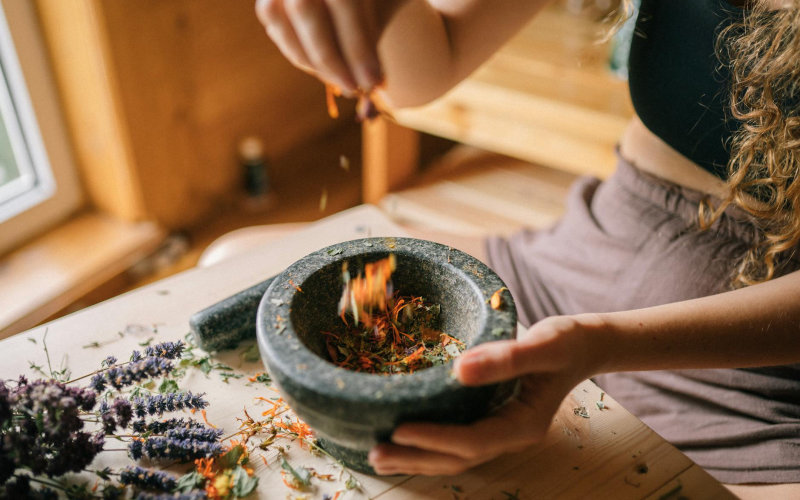

I burned through four store-bought salves in one winter. Four. And every single one had an ingredient list that read like a chemistry exam. That’s when I finally decided to just make my own, and honestly, I wish I’d done it years earlier.
This recipe has become the one thing I make every single autumn without fail. It’s sitting on my bathroom counter right now, in a little amber jar, and it’s handled everything from my kid’s scraped knee to the cracked knuckles I get every February when the heating kicks in full blast. It works. Really works.
What you’re about to learn isn’t just a recipe. It’s a process you’ll understand well enough to tweak, scale, and eventually teach someone else.
Why Calendula and Lavender Are Such a Good Pair
These two plants are doing completely different jobs—and that’s exactly why the combination hits differently.
Calendula (Calendula officinalis) is the workhorse. It contains flavonoids, triterpenoids, and polysaccharides that actively support your skin’s healing response. Research published in the Journal of Wound Care back in 2009 showed calendula extract outperformed petroleum jelly in post-surgical wound healing. Not a minor footnote. This flower has been used medicinally since at least the 12th century, and it earned every bit of that reputation.
Lavender does something else entirely. Its main active compounds—linalool and linalyl acetate—have genuine antimicrobial properties, and the scent measurably calms the nervous system (yes, that’s been tested in clinical settings, not just claimed by people who like candles). So you’re getting skin support AND something that actually helps you decompress while applying it. Which matters more than it sounds when your skin is already raw and irritated and everything feels worse than it probably is.
Together, they tackle inflammation, microbial risk, and moisture loss all at once.
What You’ll Need (Full Ingredients List)
No exotic sourcing required. Most of this you can order online or pick up at a decent health food store.
For the infused oil:
Dried calendula flowers — 1 cup loosely packed (not fresh; moisture causes mold)
Carrier oil — 1 cup (olive oil is traditional, but fractionated coconut oil absorbs faster and honestly works beautifully)
For the salve:
Infused calendula oil — 1 cup
Beeswax pellets — 1 oz (about 28 grams) for a softer salve, up to 1.5 oz if you prefer something firmer
Lavender essential oil — 20 drops (roughly 1 ml)
Optional: 5 drops of tea tree oil if you want stronger antimicrobial action for wound care
You’ll also need a double boiler or a mason jar sitting in a pot of water, a kitchen scale, small amber or tin containers for storing, and a thermometer isn’t a bad idea either.
How to Make Your Infused Calendula Oil First
This step takes time. But it’s genuinely not hard.
The slow-infusion method is my preference. Pack your dried calendula flowers into a clean, dry mason jar, cover completely with your carrier oil, and make sure every single petal is submerged—air exposure on the top layer can cause rancidity. Seal it. Set it somewhere warm and dark for 4 to 6 weeks, shaking every few days when you think of it.
No six weeks? Use the quick-heat method. Flowers and oil in a double boiler on the absolute lowest heat—around 110°F to 120°F—for 2 to 4 hours. Do NOT let it climb higher than that. You’ll denature the beneficial compounds and defeat the whole point.
Once it’s infused, strain through cheesecloth and squeeze every last drop out. That oil is gold. I mean that literally.
Making the Actual Salve
This part is satisfying. Takes maybe 20 minutes.
Melt your beeswax in the double boiler first, then pour in your infused oil and stir gently until they’re fully combined. Here’s the tip that took me embarrassingly long to figure out: do the freezer test before you commit to pouring. Drop a small amount onto a cold plate, wait 60 seconds, and test the texture with your finger. Too hard? Add a splash more oil. Too soft and greasy? Add a bit more beeswax. Do this while everything’s still liquid and adjustable.
Pull it off the heat. Let it cool for about 2 minutes—just enough that you’re not flash-evaporating your essential oils the second they hit the pan. Then add your 20 drops of lavender oil, stir immediately and quickly, and pour into your containers before it starts to set.
It’ll be fully solid within 30 to 60 minutes depending on how warm your kitchen runs.
How to Store It and How Long It Lasts
Shelf life matters. Don’t skip this.
In a cool, dark spot, your homemade calendula lavender salve should last 12 to 18 months. But if you went with olive oil as your base, plan closer to 12 months—olive oil’s unstable fats break down faster. Fractionated coconut oil extends shelf life noticeably because those unstable fats have already been removed in processing.
Label everything with the date you made it. You will absolutely think you’ll remember. You won’t. I’ve lost track of batches more times than I’d like to admit.
Small amber glass jars beat clear ones because UV light degrades the very compounds you worked to preserve. Two-ounce tins travel well, make good gifts, and stack neatly in a medicine cabinet.
How to Use Your Salve Effectively
Apply a thin layer to dry or cracked skin—heels, elbows, knuckles—once or twice a day. For minor cuts, clean the wound first (obviously), then apply a small amount and cover if needed.
Don’t put it on deep or infected wounds. This isn’t a substitute for medical care, and I’d never suggest otherwise. But for everyday stuff? Chapped lips, minor scrapes, dry cuticles, that raw patch under your nose from blowing it all winter—it handles all of it.
Some people do an overnight treatment: thick application, cotton socks, wake up with heels that actually feel human again. That works. I’ve done it.
Bottom Line
Here’s what most salve recipes won’t tell you: the quality of your infused oil matters far more than your beeswax ratio. People obsess over beeswax percentages, but if your calendula oil was made with commercially dried flowers (often dried at too high a temperature, which degrades the flavonoids), you’re building a beautiful-looking salve on a weak foundation. Source your dried calendula from a reputable herbalist supplier—Mountain Rose Herbs and Starwest Botanicals both carry tested, properly dried flowers—and your results will noticeably outperform anything you’d buy off a shelf.
Frequently Asked Questions
Can I use fresh calendula flowers instead of dried?
No, and this one actually matters. Fresh flowers contain water, and water in an oil-based salve creates the perfect conditions for bacterial and mold growth. Always use dried. If you’re drying your own from the garden, spread them on a screen for 1 to 2 weeks in a warm, well-ventilated spot until they’re completely papery to the touch.
What if I want a vegan version without beeswax?
Candelilla wax is your best substitute. Use roughly half the amount you’d use for beeswax—so about 0.5 oz per cup of oil—because it’s significantly harder. Carnauba wax works too, but it can leave the salve feeling slightly waxy rather than silky on skin.
Is this safe to use on children?
For kids over 2, yes, generally safe. Lavender essential oil at this dilution (about 1%) falls well within safe parameters according to the National Association for Holistic Aromatherapy guidelines. For babies under 2, skip the essential oil entirely and use just the calendula-infused oil on its own.
How do I know if my salve has gone bad?
Trust your nose. Rancid oil has a distinct off smell—somewhere between old crayons and stale nuts. If something smells wrong, toss it. Also watch for unusual discoloration or texture changes, which can signal contamination.
This article is for informational purposes only and should not replace professional medical advice.
Photo by Yan Krukau on Pexels

