
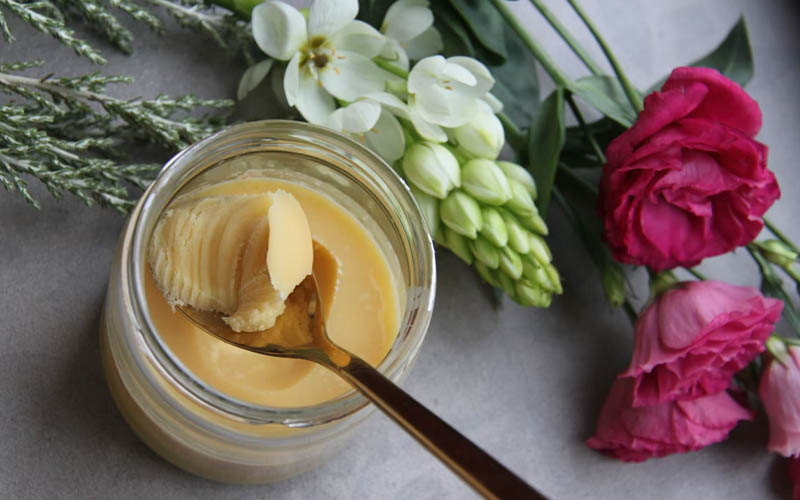

Store-bought lotions are quietly deceiving you. Not in some grand conspiracy way — just on the back label, where “aqua” claims the top spot and anything that might actually help your skin appears somewhere around ingredient eight. I’ve been mixing my own body care stuff since 2012, and I’ll tell you this honestly: once you try real whipped shea butter, those fancy bottles start collecting dust.
And it’s not complicated. Not even a little. A stand mixer, four ingredients, twenty minutes of your time — that’s genuinely all that stands between you and something that outperforms most $40 boutique creams.
So let’s get into it. Because there are a few small mistakes that’ll wreck your whole batch, and I want you to avoid them.
Why Shea Butter Actually Works
Shea butter is packed with oleic and stearic fatty acids that closely mirror your skin’s own lipid structure. What that means practically? Your skin soaks it up fast, without resistance. A 2010 study in the Journal of Oleo Science backed up what West African communities have known for centuries — shea butter carries real, measurable anti-inflammatory properties.
Raw, unrefined shea is what you’re after here. The refined kind looks cleaner, smells less nutty, but processing strips out the vitamins and phytonutrients that do the actual work. Go unrefined. Every time.
What You’ll Need (Exact Amounts)
Here’s the base recipe I keep coming back to:
- 1 cup raw unrefined shea butter
- 3 tablespoons fractionated coconut oil
- 2 tablespoons sweet almond oil
- 15-20 drops of essential oil (lavender or frankincense work beautifully)
Four things. That’s the whole list. You can grab all of them on Amazon or at most natural food stores — NOW Solutions and Sky Organics are both solid without being expensive.
How to Prepare Your Shea Butter Before Whipping
This step trips people up more than any other. Too cold, and the shea butter won’t whip — it just clumps. Too warm, and it melts down into an oily pool that re-hardens grainy and sad.
Pull your shea butter out and let it sit at room temperature for around 30 minutes (assuming you’ve been keeping it somewhere cool). You want the texture of softened baking butter — a spoon should leave an impression, but nothing should be pooling or shiny. That middle ground is your target.
The Whipping Process Step by Step
Drop your softened shea butter into a stand mixer bowl, or use a hand mixer if that’s what you’ve got. Beat it on medium for roughly 2 minutes until it starts turning fluffy and a shade lighter.
Then, with the mixer still running, pour in your coconut oil and almond oil. Bump the speed to high and let it run for 5 to 8 minutes. You’re watching for stiff, cloud-like peaks — it should honestly look like whipped cream. That’s your cue to fold in the essential oils by hand and give it one last quick spin.
Storing Your Whipped Lotion
Wide-mouth glass jars are the move. I use 8-ounce Ball mason jars and they work perfectly. Keep them away from humidity — and yes, that means not on your shower shelf or right beside the sink. Moisture sneaking into an oil-based product is basically a mold invitation.
Shelf life sits around 12 months, no preservatives needed, as long as you scoop with dry hands or a clean spatula. Water in the jar is the one thing you can’t let happen.
Customizing for Your Skin Type
Got dry, flaky winter skin? A teaspoon of rosehip oil does wonders — it’s dense in vitamin A and genuinely transforms rough patches. If you’re oily or acne-prone, swap the sweet almond oil for jojoba. Jojoba is technically a wax ester that mimics your skin’s natural sebum without gunking up your pores.
Sensitive skin? Skip the essential oils on your first batch entirely. Run a test with just the base formula and see how your skin responds before adding anything extra.
Bottom Line
Here’s something most recipe posts skip over entirely: the sequence you add your oils in actually shapes the final texture. If you pour both liquid oils in before you’ve hit full whip, you deflate the air bubbles you’ve been building — and the result is a dense, heavy paste that just sits on your skin. Always whip the shea butter on its own first, build those peaks, then stream your oils in. That order is what separates a light, fast-absorbing lotion from something that takes twenty minutes to sink in.
Frequently Asked Questions
Can I use refined shea butter for this homemade whipped shea butter body lotion recipe?
Technically, yes. But refined shea butter loses a meaningful amount of its vitamins and anti-inflammatory compounds during processing. The unrefined version has a nutty smell that some people aren’t wild about — fair enough — but for actually treating dry skin, it’s the stronger option.
Why did my whipped shea butter turn grainy after a few days?
Temperature swings. Almost always. When shea butter partially melts and re-solidifies, the fatty acids crystallize unevenly and you end up with that gritty texture. Stash your jar somewhere with a consistent, cool temperature — a bedroom dresser drawer works great — and it’ll stay fluffy much longer.
How much should I apply, and when?
Right after your shower, while your skin is still slightly damp. A pea-sized amount is enough to cover your entire forearm. People think shea butter is greasy because they use way too much of it — dial it back and that problem disappears.
Is this safe to use on children’s skin?
The base formula — shea butter, coconut oil, almond oil — is gentle enough for kids. But skip the essential oils for anyone under two, and do a small patch test first no matter how old they are.
This article is for informational purposes only and should not replace professional medical advice.

