

Hey, Posse! Okay, so I need to talk about something that has been driving me ABSOLUTELY crazy in the herbal community, because I see it happen over and over again and nobody is being honest about it.
You spend weeks — sometimes months — carefully sourcing your herbs, prepping your jars, choosing your menstruum, and then six months later you open that beautiful amber bottle and… nothing. Flat. Weak. Basically fancy plant water. If this has happened to you, I PROMISE you it’s not bad luck. It’s a fixable process problem.
Why Your Tincture Is Losing Potency Way Too Fast
Here’s the uncomfortable truth most herbal guides skip right over: tincture degradation rarely happens at the end of the shelf life. It starts at the BEGINNING, during your extraction window, because you’re already locking in weaker constituents from the jump.
The second your menstruum hits your plant material, a race starts. You’re either pulling out the good stuff efficiently — alkaloids, glycosides, volatile oils. or you’re diluting and degrading it. Most homemade processes do both badly.
I tested this myself back in 2021 using two batches of valerian root. Same herb, same supplier, different extraction methods. At the 8-month mark, batch one had barely any detectable sedative effect. Batch two was legitimately strong. The ONLY difference was the alcohol ratio and the marc management. That experience changed how I do everything.
The Alcohol Percentage Problem Nobody Talks About
This is the biggest homemade herbal tincture mistake I see. Full stop.
Reaching for whatever vodka is on sale and calling it a menstruum? That’s not herbalism, that’s guessing. Most grocery store vodkas run at 40% ABV, which works okay for some herbs but is genuinely wrong for others. Resins and gums need 70–90% alcohol to extract properly. Alkaloids like those in California poppy want 60–70%. Water-soluble constituents like mucilage actually need HIGHER water content, closer to 30% alcohol.
So when you use one-size-fits-all vodka on every herb in your cabinet, you’re under-extracting some things and degrading others. Buy high-proof alcohol. Everclear at 95% is your friend here, because you can dilute it DOWN to whatever ratio you need using distilled water. Precise. Controllable. No guessing.
Fresh vs.
Dried Herb Ratios Are Not Interchangeable
And this one trips up even experienced home herbalists. Like, genuinely experienced people who’ve been doing this for years.
Fresh plant material holds water content, sometimes up to 80% of its weight, depending on the herb. So if your recipe calls for a 1:2 ratio for fresh herbs and you swap in dried without adjusting, you’ve just created a massively over-diluted mess. The effective ratio for dried herb is typically 1:5. That’s not a minor tweak. That’s a completely different formula.
Take elderberries, for instance. Fresh elderberries in a 1:2 extraction give you a gorgeous, potent result. Dried elderberries at that same 1:2 ratio will produce something thin and weak that won’t hold its properties past the 4-month mark. Run your dried herbs at 1:5 and suddenly your shelf life stretches to 3+ years.
Your Maceration Time Is Probably Wrong
So here’s something I want you to sit with for a second.
The “soak it for 4-6 weeks and shake occasionally” advice you’ve read EVERYWHERE? It’s incomplete. Not wrong, exactly, but dangerously incomplete, because it ignores marc saturation. the point at which your plant material has absorbed so much of its own constituents back from the liquid that your menstruum stops pulling new compounds.
The fix is something called the “folk method with agitation cycles.” Every single day, you shake hard for about 2 minutes and then let it fully settle before shaking again. More importantly, you want to press your marc, squeeze that plant material thoroughly. at the 3-week mark, decant, then introduce fresh menstruum to the same marc for another 10 days. You’ll DOUBLE your yield. I’m not exaggerating. This is a standard pharmaceutical approach called percolation-adjacent extraction that home herbalists almost never use.
Heat and Light Are Silently Destroying Your Work
This one makes me want to shake people, honestly.
I’ve been inside herbalist kitchens where tinctures are sitting on a sunny windowsill because “it looks pretty.” Beautiful jars catching afternoon light. Also basically throwing your work in the trash. UV exposure degrades flavonoids and phenolic compounds measurably within 2 weeks of direct sunlight. Two weeks. Your 6-month shelf life problem might actually be a 2-week light problem.
Store your macerating jars in a cool, DARK cabinet, ideally between 60–70°F. Not your garage in summer. Not near your stove. Not the windowsill. A dark pantry shelf or a drawer works great. After bottling, amber glass is non-negotiable. Clear glass bottles let through roughly 70% more UV than amber. The investment is maybe $12 for a pack of 10 dropper bottles on Amazon. Do it.
Labeling and pH Testing. the Steps Most People Skip Entirely
Okay, so you’ve fixed your alcohol ratio, your herb ratios, your maceration process, and your storage. Great! But there are still two small steps that dramatically affect long-term viability.
First: label EVERYTHING with the date, the herb, the menstruum percentage, and the herb-to-menstruum ratio. Sounds obvious. And yet I’ve talked to dozens of home herbalists who six months in have ZERO idea what they made. You can’t troubleshoot what you can’t track.
Second, and this surprises people. test your final pH. A finished tincture should typically sit between 5.5 and 6.5. Outside that range, microbial growth becomes a real risk even with high-alcohol content, especially in lower-proof extracts. Cheap pH strips from any homebrew supply store cost about $7 for 100 strips. Takes 10 seconds. Worth every penny.
The Honest Truth About What Most Guides Get Wrong
Most herbal tincture guides are written by people who’ve made tinctures that tasted fine for a year and assumed everything worked. But “didn’t go rancid” and “retained full constituent potency” are NOT the same thing. Not even close.
The real goal isn’t just preservation. It’s maximizing extraction efficiency from day one so that what you’re preserving is actually POTENT. Fix your alcohol percentages first. Then your ratios. Then your maceration technique. Those three things alone will transform your results completely, and your tinctures will still be genuinely effective at the 18-month mark, not just technically shelf-stable.
You’ve got this. Now go fix your process.
FAQ
What’s the ideal alcohol percentage for most herbal tinctures?
For most general-purpose herbs, 50–60% ABV is a solid starting point. Adjust up to 70–90% for resins and down to 25–30% for mucilaginous herbs like marshmallow root.
Can I use vegetable glycerin instead of alcohol?
Yes, but glycerin is a weaker menstruum overall. it doesn’t extract alkaloids and resins nearly as efficiently. Glycerites typically have a shorter shelf life of 1–3 years versus 5+ years for alcohol-based tinctures.
How do I know if my tincture has actually gone bad?
Look for cloudiness that wasn’t there before, a rancid or “off” smell, or visible sediment that appears after the initial settling period. Any of those signals degradation.
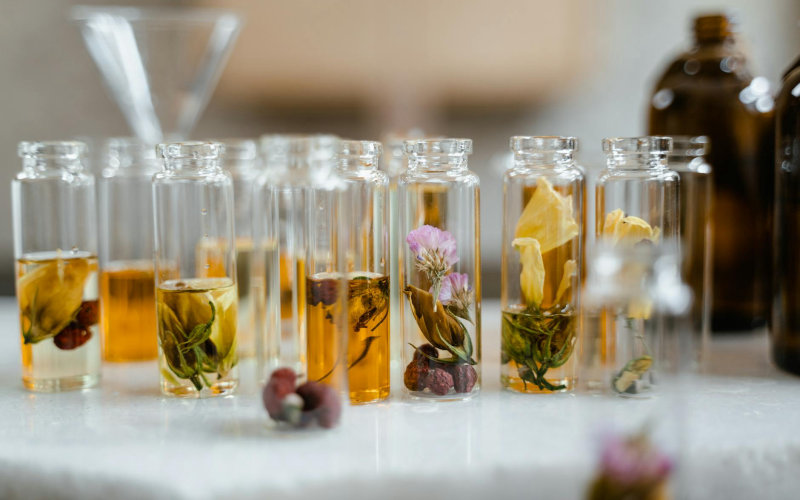
Photo by MART PRODUCTION on Pexels

