

My knees were wrecked by 2019. Not dramatically, not from some sports injury I could brag about—just years of sitting wrong, walking too much in bad shoes, and ignoring the slow grind of inflammation that crept up quietly. A rheumatologist friend told me to try an anti-inflammatory protocol before jumping to NSAIDs. I was skeptical. Tea felt like a placebo dressed in a mug.
Then I started actually making it correctly. Not the watery, polite version from a grocery store tea bag. I mean a properly brewed, high-concentration ginger turmeric tea for joint pain that you steep long and drink consistently. Three weeks in, my morning stiffness had dropped by maybe half. Not gone—but half matters enormously when half is the difference between limping to the kitchen and walking normally.
So here’s everything I know about doing this right.
Why This Combination Actually Has Science Behind It
Turmeric gets all the press, and honestly it deserves most of it. The active compound—curcumin—has been studied in over 12,500 peer-reviewed papers at this point. A 2016 clinical trial published in the Journal of Medicinal Food found that curcumin extract performed comparably to ibuprofen for knee osteoarthritis pain in 367 patients over four weeks. That’s not nothing.
Ginger brings a different mechanism entirely. Gingerols and shogaols inhibit prostaglandin synthesis—basically the same pathway COX-2 inhibitors target. A 2015 study out of the University of Miami tracked 247 osteoarthritis patients and found that concentrated ginger extract reduced knee pain by 40% compared to placebo.
Together they hit inflammation from two directions at once. Think of it like pinching a garden hose from two spots instead of one. You’re not just blocking a single inflammatory pathway—you’re disrupting the whole cycle more completely.
The Ingredients You Need (And the Exact Amounts)
Don’t buy powders from the spice aisle if you can avoid it. Fresh roots are dramatically more potent. Here’s what I use for a single strong serving:
2 inches of fresh ginger root, unpeeled and sliced thin. About 1.5 inches of fresh turmeric root (or 1 teaspoon of high-quality organic powder if fresh isn’t available). One full lemon, juiced. A fat pinch of black pepper—this is non-negotiable. A teaspoon of raw honey. 2 cups of water.
The black pepper thing isn’t folk wisdom. Piperine, the active compound in black pepper, increases curcumin absorption by 2,000%. Two thousand percent. Without it, most of the turmeric you’re drinking passes right through you and does essentially nothing.
The Brewing Method That Maximizes Potency
This is where most people get it wrong. You can’t just pour hot water over ginger and turmeric and call it tea. The compounds need to be properly extracted.
Start by simmering—not boiling—your sliced ginger and turmeric in 2.5 cups of water for at least 15 minutes. I usually push it to 20. Boiling can degrade some of the volatile compounds, so keep it just under a full rolling boil. Little bubbles. Patient bubbles.
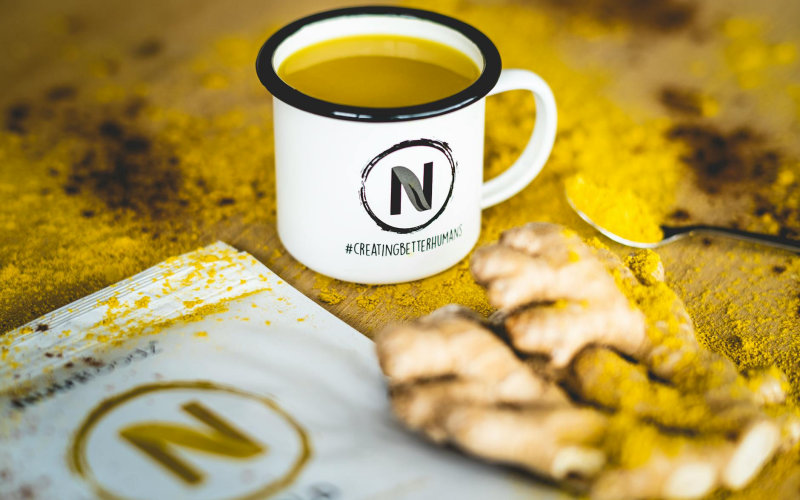
After 20 minutes, pull it off the heat and let it sit uncovered for another 5 minutes. Then add your lemon juice, black pepper, and honey. Strain through a fine mesh strainer into your mug. The color should be a deep amber-orange. If it looks pale yellow, you either didn’t use enough root or didn’t simmer it long enough.
Drink it warm. Not scalding—very hot beverages (above 65°C consistently) have been linked to esophageal irritation with long-term daily use.
How to Build a Habit That Sticks
Here’s what I’ve learned from years of recommending this to people: the problem is almost never the recipe. It’s consistency. One cup of ginger turmeric tea doesn’t do much. Thirty days of it starts to move the needle.
I batch-prep my roots every Sunday. I slice a week’s worth of ginger and turmeric, store them in a glass jar with a little water, and keep them in the fridge. Takes 10 minutes. Makes daily brewing so frictionless that I actually follow through.
Some people do better with two smaller cups per day than one large one. Morning and early evening seems to work well—it keeps more consistent levels of these compounds in your blood throughout the day rather than one single spike.
And please, give it a real trial. Six weeks minimum. I know that sounds like a long commitment, but joint inflammation didn’t develop overnight and it won’t resolve overnight either.
Boosting the Recipe for Serious Joint Pain
If your inflammation is significant—rheumatoid arthritis, chronic injury, bad osteoarthritis—there are a few additions worth considering.
Boswellia powder (half a teaspoon) blends surprisingly well into this tea and carries its own solid anti-inflammatory evidence. A 2011 study published in the Indian Journal of Pharmaceutical Sciences showed significant reduction in arthritis symptoms with 1,000mg daily. Cinnamon is another easy add—half a stick simmered alongside your roots—and it helps the flavor while contributing modest anti-inflammatory properties of its own.
Some people add a small piece of willow bark, which is literally where aspirin comes from. Salicin, the active compound, was first isolated from willow bark in 1828. It works. But it’s also contraindicated if you’re on blood thinners, so don’t touch it without checking with your doctor first.
Common Mistakes That Kill the Effectiveness
Using turmeric powder from a jar that’s been sitting in your cabinet since 2021. Powders lose potency fast—anything older than 6 months should be replaced. Skipping the fat. Curcumin is fat-soluble, so a small splash of full-fat coconut milk added to your mug after brewing dramatically improves absorption. And drinking too little of it—a half-cup sip won’t accomplish much. You need the full serving.
But the biggest mistake? Expecting this to replace medical care. This tea is a complement, not a cure. Use it alongside whatever your healthcare provider recommends, not instead of it.
Bottom Line
Here’s something I haven’t seen spelled out anywhere else: the reason most people fail with herbal anti-inflammatory teas isn’t the recipe—it’s that they treat them like medication instead of food. You wouldn’t eat one serving of spinach and expect it to fix an iron deficiency. This tea works exactly the way nutrition works—cumulatively, slowly, and only when it becomes part of your actual daily pattern rather than an occasional gesture toward health. The potency is real. But it only becomes available to you through repetition, not intensity.
Frequently Asked Questions
How long before ginger turmeric tea for joint pain actually starts working?
Most people notice something between weeks 3 and 6 of daily use. Don’t judge it at day 5. The anti-inflammatory compounds accumulate in your system over time—the effect is cumulative, not immediate.
Can I drink this tea if I’m on blood pressure medication?
Ginger in large amounts can have mild blood-thinning and blood-pressure-lowering effects. If you’re on antihypertensives or anticoagulants, talk to your doctor before making this a daily habit. One occasional cup is unlikely to cause problems for most people, but daily high-dose ginger is a different story entirely.
Is it okay to use ground turmeric instead of fresh turmeric root?
Yes, but use high-quality organic powder—preferably from a brand with third-party testing, like Frontier Co-op or Simply Organic—and bump the black pepper up slightly. Fresh root is significantly more bioavailable, but good powder works if fresh turmeric isn’t something you can find locally.
Can I make a big batch and refrigerate it?
Absolutely. I make 3-day batches regularly. Store it in a sealed glass container in the fridge and reheat gently when you’re ready. Skip the hard microwave blast—gentle heat on the stovetop preserves the compounds better. It keeps well for about 4 days before the flavor starts going flat.
This article is for informational purposes only and should not replace professional medical advice.
Photo by Stefan Heurterre on Pexels

